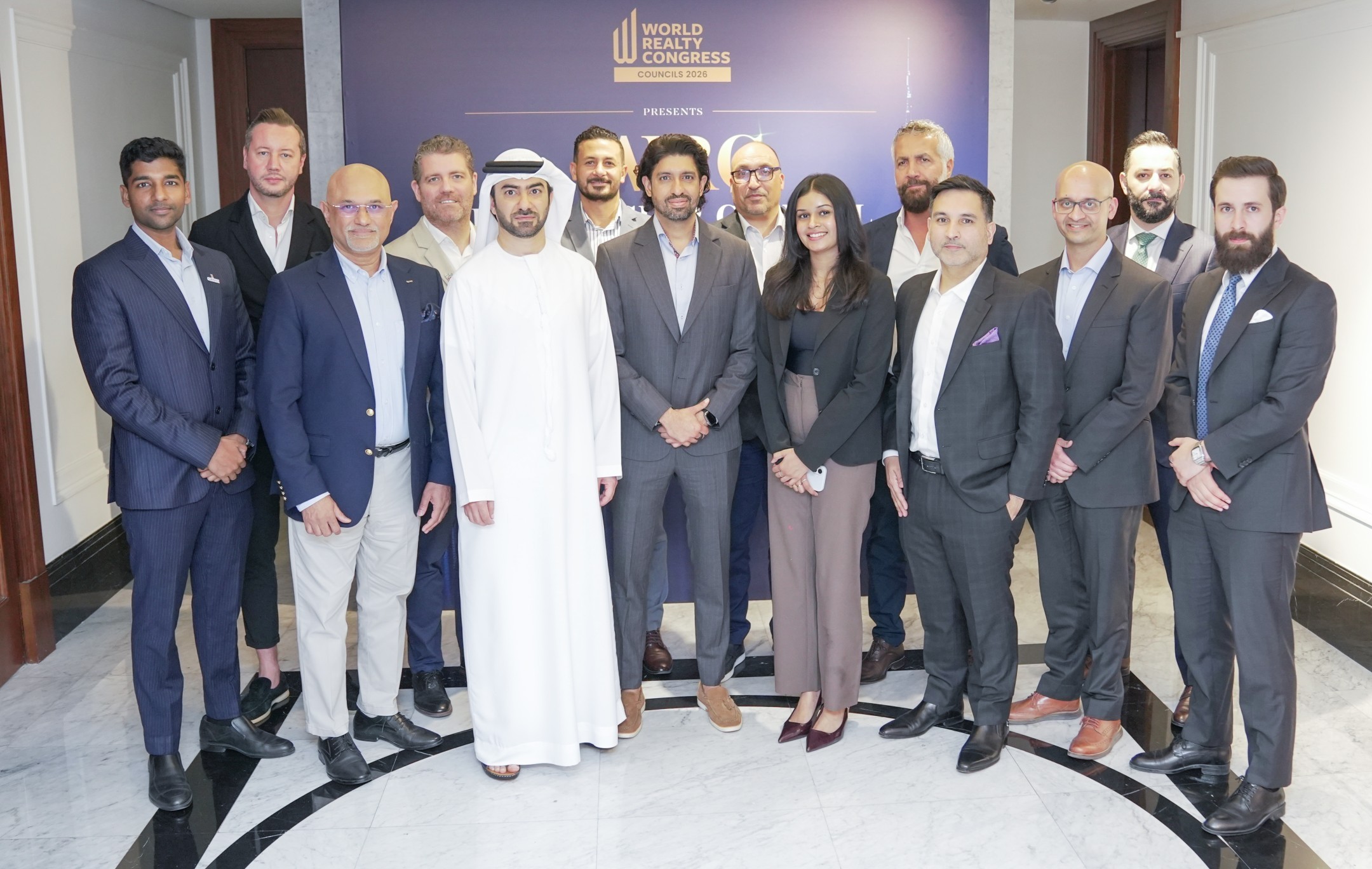
The inaugural WRC Leadership Council, convened on October 21, brought leaders from across the real estate value chain to one closed-door table in Dubai, testing a principle that holds for any industry: long-term value depends on teams that rarely meet.
In most industries, the people who create a product rarely sit at the same table as the people who maintain it for years afterwards. Design, sales, operations and service each own a stage, and each stage shapes what the customer ultimately experiences. When those teams work in isolation, value leaks at every handover.
Real estate shows this more clearly than most. Developers conceive a project, contractors deliver it, and community managers, facilities operators and asset managers look after it for decades. WRC Councils was created to bring those groups into one room.
“WRC Council was born from a simple belief: the future of real estate cannot be shaped in silos. We need different perspectives around the same table, having conversations that lead to meaningful change,” said Jatin Deepchandani, Founder, World Realty Congress and WRC Councils.
A Smaller Table, By Design
WRC Councils is one of five pillars of the World Realty Congress (WRC) ecosystem, alongside the Congress, the WRC Awards, Community Tours and WRC After Hours. While the Congress is the industry’s common stage each December, the Councils carry that dialogue beyond the event dates in a smaller, closed-door format.
Each roundtable brings together 12 to 15 invited leaders from across the value chain. Participation is by invitation, keeping every table balanced, senior and relevant. The size is deliberate: fewer voices leave more room for candour, and a curated mix ensures no single perspective dominates.
The format is also built for outcomes. Each council follows five steps: identify shared challenges, convene the right voices, align on priorities, document the outcomes, and carry priority themes forward. For business leaders, it is a familiar discipline: a meeting is only as useful as what happens after it.
The First Roundtable
The inaugural WRC Leadership Council met on 21 October 2026 at Taj Business Bay, Dubai, under the theme “From Project Delivery to Long-Term Asset Value”. The premise was simple. Handover is not the finish line, and a building’s long-term worth depends on decisions made by many different parts of the industry.
Moderated by Prof. Jeevan D’Mello, CEO, Zenesis Corporation, with Jatin Deepchandani as co-moderator, the table drew leaders among developers, community managers, facilities and asset management firms alongside construction and real estate consultancy.
The development perspective came from Abhishek Jalan, CEO, Grovy Developers; Allaoua Gaham, Chief Wellness Officer, Citi Developers; Faris Al Khattab, Managing Director, Object 1; and Madhav Dhar, CEO & Co-Founder, ZāZEN Properties. Ali Sharif Al Marzooqi, VP – Property & Community Management, Deyaar Community Management LLC, and Mohamed Kotb, Senior Director – Community Management & Compliance, LOAMS, represented community management.
Facilities and asset management was represented by Tarek Al Assil, Executive Director, iFM Facilities Management; Garry Murray, Chief Growth Officer, KAIZEN Asset Management Services; and Kartik Shankar Narayan, Chief Sales Officer, Berkeley Services UAE. Shadi Küzam, Founder & CEO, Gulf Modern Contracting, brought the construction view, and Said El Haouasli, Chief Executive Officer, Land Sterling, the consultancy perspective.
What Comes Next
The Council’s key themes, sector perspectives and recommendations will be captured in a post-event whitepaper, with participating leaders acknowledged as contributors. The conversation then moves to a wider audience at the 11th edition of World Realty Congress, returning to Dubai from 7 to 11 December 2026 at Mövenpick Grand Al Bustan.
For leaders in any sector, the lesson travels well. Long-term value is rarely lost in one department. It slips through the gaps between them.