Last updated:
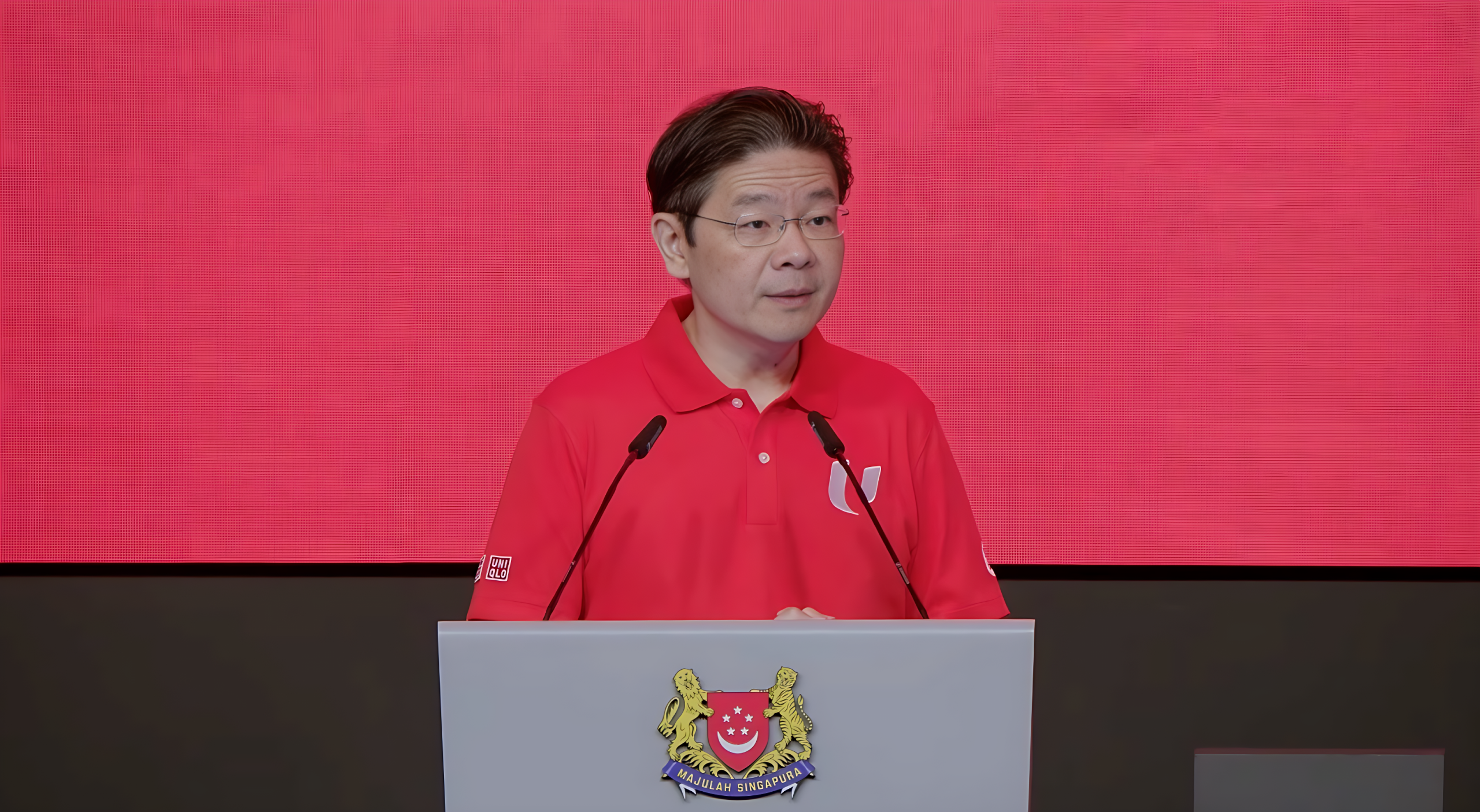
On May 1, Singapore’s Prime Minister Lawrence Wong delivered one of the most consequential economic warnings of 2026. Some countries may slip into recession, he said, as the Middle East crisis keeps the Strait of Hormuz closed. The caveat most headlines missed: even after it reopens, recovery will not be quick.
“The Strait of Hormuz has been closed for more than two months. The impact is being felt, not just in higher prices, but also in tightening supply. The disruptions will not stop at energy. Fertiliser, food and other essential inputs will be hit next. We can expect shortages in more items to emerge,” Wong said at the May Day Rally in Singapore.
Wong had earlier warned that even if a ceasefire were achieved, the impact would persist; energy production and distribution infrastructure have been damaged, and the risk of a prolonged closure of the Strait, as well as other key shipping routes including the Red Sea, remains significant.
At a virtual call hosted by France and the UK on freedom of navigation, Wong was unequivocal: “The conflict cannot truly be behind us if the Strait of Hormuz remains closed or subject to arbitrary controls. The restoration of safe, predictable and unimpeded passage must go hand in hand with efforts to end the war.”
The numbers confirm the scale of the disruption. Brent crude averaged $117 per barrel in April ($46 above pre-war levels), with daily prices spiking as high as $138 per barrel on April 7, according to the U.S. Energy Information Administration. The IEA has characterised the crisis as “the largest supply disruption in the history of the global oil market,” with jet fuel nearly tripling after Middle Eastern exports were cut off. The 1970s stagflation comparison is not rhetorical, but the working model.
THE IRAN WAR HAS NOT ENDED
This is the fact the Singapore warning rests on, and the one global markets have not fully priced in. Iran’s First Vice President Mohammad Reza Aref has declared that Tehran’s right to the Strait of Hormuz is “established, and the matter is closed,” according to Iran’s ISNA state news agency. That is not a negotiating position. It is a declaration that Iran considers the world’s most critical energy chokepoint a sovereign entitlement it will not discuss or concede.
The EIA’s May 2026 outlook assumes the strait will remain effectively closed through late May, with flows only slowly starting to resume, and expects it will take until late 2026 or early 2027 for most pre-conflict production and trade patterns to return.
All three stories in this piece are, in the end, the same story: who controls the Strait of Hormuz, and what it costs the world when that question is actively contested.
THE DUBAI STORY NOBODY IS WRITING
While the world watched Trump land in Beijing, a more consequential story was breaking closer to home. Netanyahu’s office announced he had made a secret wartime visit to the UAE to meet Sheikh Mohammed bin Zayed, calling it a “historic breakthrough in relations between Israel and the United Arab Emirates.”
The UAE responded through its official state news agency WAM, stating that its relations with Israel “are public and were established within the framework of the well-known and publicly declared Abraham Accords” and “are not based on secrecy or clandestine arrangements.” Any claims regarding undisclosed visits, WAM said, “are baseless unless issued by the relevant official authorities in the UAE.”
Iran was unambiguous. Iranian Foreign Minister Abbas Araghchi warned that “collusion with Israel is unforgivable” and that those doing so “will be held to account,” further accusing the UAE of being directly involved in the act of aggression against Iran.
Netanyahu in the UAE during an active war with Iran is one of the most consequential diplomatic stories of the year. It signals that the Abraham Accords have quietly evolved into a wartime security architecture, and that Iran has noticed.
According to official data from the UAE’s defence ministry, the UAE has sustained more Iranian missiles and drones during the war than any other country, including Israel, while keeping its airports open, markets functioning, and investor messaging steady. Singapore is telling the world how bad the damage could get. Dubai is showing what it looks like to operate at the centre of it.
Source: Prime Minister’s Office of Singapore (pmo.gov.sg) — May Day Rally transcript; April 2026 Middle East statement; April 17 Hormuz virtual call intervention; International Energy Agency — Oil Market Reports March, April, May 2026 (iea.org); U.S. Energy Information Administration — Short-Term Energy Outlook May 2026 (eia.gov); ISNA (Islamic Republic News Agency, Iran); WAM (UAE official state news agency); Netanyahu Prime Minister’s Office statement; UAE Ministry of Foreign Affairs; NPR; Al Jazeera; Euronews; Times of Israel