Last updated:
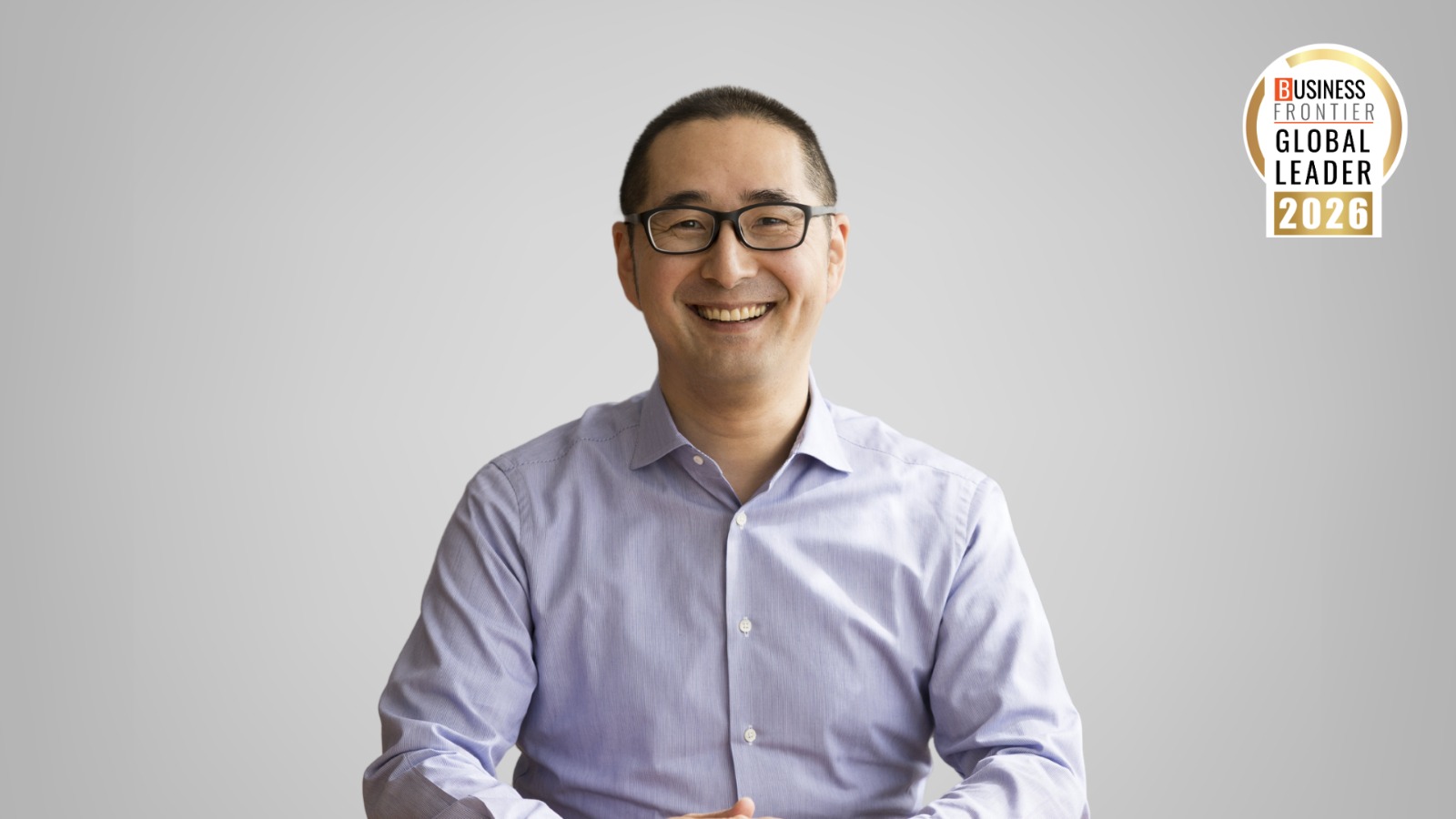
As President and Owner of Nature’s Way, one of Japan’s earliest plant-based cosmetics companies, Yoshiaki Hagiwara has resisted the pressure to grow quickly or simplify sustainability into a marketing message. Instead, he has focused on building a business grounded in conviction, one that integrates environmental responsibility, innovation, and long-term value into its core operations.
His leadership philosophy has been shaped not by trends, but by lived experience, observing how businesses endure through uncertainty, how nature resists standardization, and how leadership often requires restraint rather than acceleration. For Hagiwara, purpose is not a positioning statement and innovation is not a race; both are responsibilities.
In this conversation with Business Frontier, he reflects on legacy and leadership, sustainability as structure rather than storytelling, and why he believes conviction, and not velocity, is what ultimately defines businesses that last.
Q. You’ve successfully carried forward a family legacy while steering the company into a new direction. What have been the most defining challenges and lessons in that transition?
After the war, when Japan was still politically and economically unstable, my grandfather started his business by bringing food from the countryside to Tokyo. Initially, he simply delivered food to hungry people amid shortages. Over time, his keen eye for quality led him to carefully select vegetables and fruits, and the business evolved into a fruit shop and eventually one of Japan’s earliest supermarkets.
From childhood, I grew up listening to his stories about surviving the harsh post-war market. They were always compelling and exciting, and from him I learned the joy of turning zero into one.
My father later ran Japan’s first organic cosmetics company. At that time, the concept of plant-based cosmetics did not exist, so as a child I didn’t fully understand his work until I visited a factory and saw production firsthand. Watching containers flow down the production line left a strong impression on me and made me aware, for the first time, of how products are created through systems and teamwork.
Working together was often challenging, but what he consistently taught me was to value stakeholders. He emphasized gratitude for everyone involved in bringing a product to market and told me to create cosmetics that truly delight customers. He never gave me specific instructions on product development, but he was clear that selling products and generating profit were not the ultimate goal.
From my father, I learned that the foundation of business is putting smiles on the faces of customers and stakeholders. The experiences and words I gained from my grandfather and father continue to support me as I move forward as an entrepreneur.
Q. Nature’s Way has been advocating natural and organic cosmetics for decades. How do you continue to stay ahead in a market now filled with “green” and “eco-friendly” brands?
Globally, there are fewer than ten companies that can honestly recognize each other as genuine plant-based cosmetics companies. That is how difficult it is to continue making botanical cosmetics authentically.
As one of these rare companies, we feel gratitude toward plants and deep respect for the grandeur of nature. Sustainability is not something we do for advertising purposes; it is something we genuinely and passionately strive for as part of living within nature. We approach nature with emotions that are both awe-inspiring and, at times, frightening, because nature is not something we control.
Some companies emphasize a single eco-friendly activity to present themselves favorably to customers. We are different. Our reason for existing is to make both skin and the Earth better. Each company has its own purpose, and that purpose naturally determines the actions it takes.
Q. How do you ensure that the company’s commitment to sustainability remains authentic and measurable, rather than just part of its branding narrative?
Our defining features include owning forests to absorb carbon dioxide and nitrogen, maintaining farms that cultivate organically grown herbs, and operating our own factories. We measure the emissions generated by our business activities each year and evaluate how much can be offset by our forests and farms.
We have also obtained B-CORP and SBT certifications. Through initiatives such as container recycling and clean energy utilization, we aim to make both skin and the planet healthier through our very existence. By measuring our impact annually, we ensure sustainability remains operational rather than symbolic.
“The purpose of running a company
and its profits should be one and the same.
If they are not aligned,
sustainable motivation becomes difficult”
Q. Consumer preferences are constantly evolving. What shifts in beauty and wellness have surprised or inspired you the most in recent years?
COVID-19 significantly transformed Japan’s cosmetics industry. Previously, direct contact between manufacturers and customers was not particularly welcomed. Retailers and department stores interacted with customers, while manufacturers focused on negotiations with wholesalers.
During the pandemic, wholesalers struggled to attract customers and began requesting manufacturers to promote products through SNS. As a result, manufacturers strengthened their SNS departments and began communicating product value directly to customers. At the same time, there was a rapid shift toward enhancing manufacturers’ own e-commerce sites. This change fundamentally altered how manufacturers thought about communication and responsibility toward consumers.
Q. Innovation and tradition often pull in different directions. How do you balance scientific advancement with the integrity of natural ingredients?
I do not believe tradition and innovation are mutually exclusive. Tradition is not something consciously created; it is simply a word used when looking back at outcomes. The future must never be constrained by the past.
In business, I firmly believe innovation should always take precedence. From an ingredient perspective, natural ingredients are a constant stream of new discoveries. Even within the same plant species, herbs harvested in different regions exhibit different properties due to climate and environment.
Therefore, I never think of natural ingredients as old or stable. They are challenging subjects filled with new, difficult, and unknown aspects. That challenge is what keeps innovation alive.
Q. People are at the heart of any successful organization. How are you nurturing a culture of creativity, collaboration, and purpose among your teams at Nature’s Way?
As owner and president, I hold responsibility toward all employees and stakeholders, but I cannot communicate with over 200 staff members daily. We operate through departments, and daily instructions are handled by department heads.
To avoid misunderstandings, I hold 20-minute one-on-one meetings with every staff member twice a year. We also conduct annual 360-degree evaluations to prevent authority from becoming excessive and to identify outstanding talent.
I avoid informal interactions that could undermine organizational fairness. I believe accepting solitude is part of the role of top management.
Q. As the global beauty industry becomes increasingly digital, what role do you see e-commerce and technology playing in Nature’s Way’s next phase of growth?
We believe e-commerce should be our next growth engine. We aim to enhance content on social media and other platforms to help customers understand the appeal of plant-based cosmetics.
A business model based solely on price appeal is unsustainable for a small company like ours. We do not need to appeal to everyone. Instead, we want to deeply resonate with a smaller group of customers and use that connection to strengthen our e-commerce presence. Depth of understanding matters more than volume of reach.
“Tradition is not something consciously created;
it is simply a word used when looking back at outcomes.
The future must never be constrained by the past”
Q. You’ve often emphasized that profit must align with purpose. Can you share an example of how this philosophy has guided a key business decision?
I believe the purpose of running a company and its profits should be one and the same. If they are not aligned, sustainable motivation becomes difficult.
Many companies use profits to engage in eco-friendly activities, which is positive. However, I believe eco-activities must be integrated into business operations. If sustainability depends on profitability alone, it contradicts the idea of being a positive force for the Earth, soil, and people. That is why sustainability must exist even when conditions are difficult.
Q. What global markets or partnerships excite you most as you expand Nature’s Way’s international footprint?
There are not many companies globally that can mutually recognize each other as authentic plant-based cosmetics companies. I do not wish to make this company larger than necessary, but I do want it to remain special and educational.
The Middle East and Southeast Asia are particularly important markets due to economic and population growth. I would welcome collaboration with companies that are strong in sales and share our values in those regions.
Q. After decades in leadership, what continues to motivate you personally and what legacy do you hope to leave for the next generation of leaders?
Cosmetics represent hope and the future. People choose them with excitement and anticipation. Through cosmetics, I want to deliver not only benefits for the skin, but also hope.
In an age of abundant information and AI, people often seek answers externally, but the most important answers must be decided by oneself. My motivation is the hope that authentic plant-based cosmetics can help people find happiness.
As for legacy, I hope to pass on a way of thinking: staying grounded during good times, improving during difficult times, focusing on what can be changed, and approaching others with humility and gratitude. Business must be sustainable to truly benefit many people. If there is one message I wish to leave, it is that long-term value is built through patience, responsibility, and respect.