
Air taxis are moving closer to commercial reality, but new UAE research suggests that getting them into the skies is only half the challenge. Regulation, infrastructure, investment and public confidence could ultimately determine how quickly urban air mobility becomes part of everyday transportation.
For years, air taxis have sounded like an idea borrowed from the future. That future is now beginning to look considerably closer; particularly in the UAE, where commercial urban air mobility plans are progressing.
But developing an aircraft capable of flying passengers above city traffic is only one part of the equation.
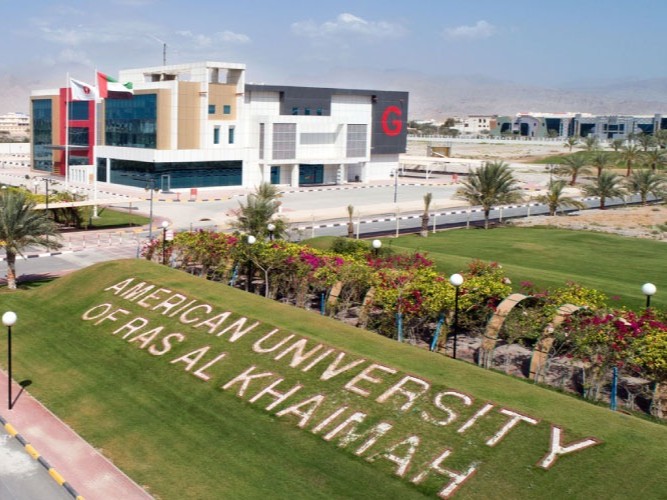
New research from the American University of Ras Al Khaimah (AURAK) has identified 17 barriers that could influence the adoption of air taxis in emerging economies, suggesting that the biggest challenges extend well beyond the technology itself.
Published in the International Journal of Mathematical, Engineering and Management Sciences, the research was led by Professor Tahseen Arshi of AURAK’s School of Business in collaboration with researchers from India.
The Biggest Barrier May Not Be the Aircraft
The researchers grouped the challenges into four areas: technological, organisational, environmental and human factors.
Among the most influential were regulatory and legal uncertainty, airspace management, technological readiness, infrastructure, investment requirements, safety, public awareness and trust.
Interestingly, regulatory ambiguity emerged as the factor with the greatest driving influence. The finding suggests that clear policies and standards could become a prerequisite for solving several of the other challenges surrounding commercial air taxi operations.
Professor Tahseen Arshi, lead author of the study and Dean of AURAK’s School of Business, said successful adoption will require regulators, policymakers and industry to address infrastructure, regulation, stakeholder collaboration and public trust alongside technological innovation.
Why the UAE Makes This Particularly Relevant
The timing gives the research particular relevance to the UAE.
Dubai has announced plans for commercial air taxi services and is developing the infrastructure and regulatory ecosystem required to support advanced air mobility. The study positions its framework as a tool that governments and businesses could use when considering how such services should be introduced and scaled.
For businesses, the emergence of air taxis could eventually have implications beyond transportation. Urban mobility influences where companies locate, how professionals move between business districts and airports, and how cities connect emerging commercial areas.
Yet the study provides a useful reminder that innovation does not become infrastructure through technology alone.
The aircraft may attract the attention, but regulation, investment, infrastructure and public confidence will determine whether people are ultimately willing, and able to use them.
As the UAE pushes advanced mobility closer to commercial reality, the next breakthrough may therefore be less about proving that air taxis can fly and more about building the ecosystem that allows them to become an ordinary part of how cities move.
Sources: American University of Ras Al Khaimah (AURAK); International Journal of Mathematical, Engineering and Management Sciences; AURAK research announcement.