
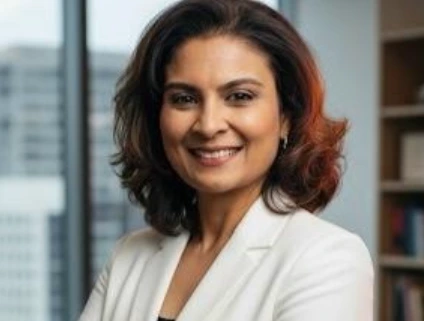
Dr. Watceilia Varso, Founder and CEO of Practice Vision, has spent her career at the intersection of neuroscience, behavioural science, and leadership development. Her argument is as simple as it is disruptive: before leaders can change organisations, they must first change themselves.
Dr. Watceilia Varso did not arrive at neuroscience-led leadership through theory. She arrived through practice, working across industries and global markets, watching organisations invest heavily in systems and strategy while the human variable remained unaddressed. Through Practice Vision, she is now taking that conviction to leaders across APAC, the USA, Europe, and the Middle East.
What core principles guide the way you lead today, and how have they evolved?
My leadership philosophy is grounded in the belief that regenerative leadership begins with regulated self-leadership. Before leaders can influence teams, cultures, or systems, they must first develop the ability to regulate their own thoughts, emotions, behaviours, and responses under pressure. Throughout my career across multiple industries and global markets, I have learned that sustainable leadership is not built on constant output but on conscious awareness, resilience, and intentional action. Today, I lead through authenticity, courage, ethical decision-making, and a commitment to helping others rise sustainably.
What shift in your industry do you believe leaders are still underestimating?
I believe many leaders are underestimating the importance of neuroscience and behavioural science in shaping organisational performance. We are operating in an era where technology is advancing rapidly, yet human behaviour remains the greatest variable in success or failure. Many organisations invest heavily in systems, AI, and processes while overlooking the cognitive and emotional patterns driving decision-making, adaptability, and culture. The future of leadership is not simply about digital transformation; it is about human transformation. Leaders who understand how the brain influences behaviour, resilience, trust, and performance will have a significant advantage in navigating complexity and sustaining high-performing teams.
How do you see your role as a leader extending beyond your organisation?
I see leadership as a responsibility that extends far beyond the boundaries of an organisation. I believe organisations do not change because strategies change; they change because people change. By helping leaders develop greater self-awareness, emotional regulation, and conscious decision-making, I hope to contribute to stronger businesses, healthier workplaces, and more resilient communities.
Walk us through the moment that proved to be the making of Practice Vision.
One of the most defining moments was launching Practice Vision during a period when uncertainty was affecting organisations globally. Rather than retreat, I leaned into the challenge and refined my vision around neuroscience-led transformation. The experience forced me to become clearer about our purpose, value proposition, and long-term impact. It taught me that adversity often reveals what truly matters and that resilience is not about avoiding challenges but growing because of them.
How has your approach to talent and culture contributed to Practice Vision’s resilience?
I believe people thrive when they are trusted, respected, and given opportunities to grow. My approach to culture focuses on creating psychological safety while maintaining accountability and high standards. By fostering a culture grounded in purpose, inclusion, and shared responsibility, we have built resilience through change and uncertainty. Strong cultures are not created during easy times; they are revealed during difficult times and strengthened through intentional leadership.
What is the ambition you are building towards?
My ambition is to advance a global movement towards regenerative leadership, a leadership that creates value not only for organisations but also for people, communities, and future generations. For our industry to move forward collectively, we must shift beyond traditional leadership models focused solely on productivity and outcomes. We need to embrace leadership as a human capability that can be intentionally developed, measured, and sustained through neuroscience, behavioural science, and conscious leadership practices.
What is the one message you want Business Frontier readers to take from your work?
One message I consistently share is that people are rarely stuck; they are patterned. Many of the limitations we experience in leadership, business, and life are driven by learned behaviours, assumptions, and beliefs that can be challenged and rewired. Leadership is not about perfection. It is about having the courage to choose differently, especially when the path is uncertain. After all, not making a choice is still a choice, and growth begins the moment we decide to step through a different door.
Quotes
The future of leadership is not simply about digital transformation; it is about human transformation
Change is possible when we become conscious of the patterns driving our decisions