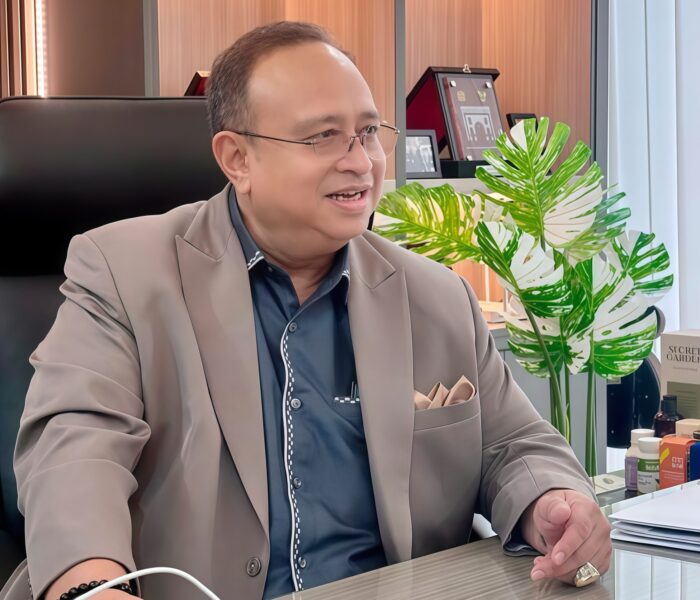
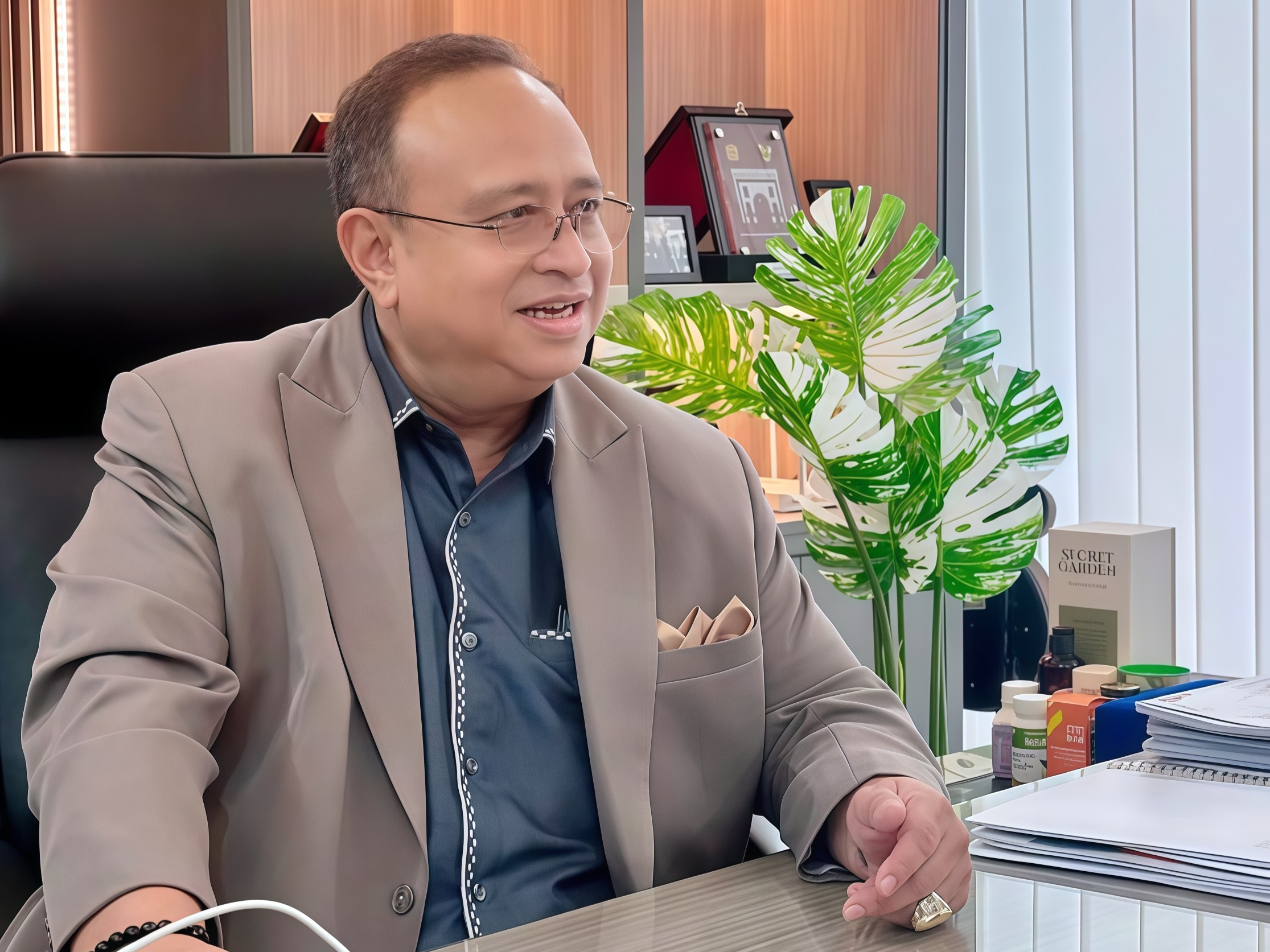
Jose Rizal, Founder & President, PT Jorindo Agung, reflects on leadership, resilient infrastructure, and why construction companies must evolve from contractors into long-term solution providers.
For Jose Rizal, leadership is measured not by the projects completed but by the trust built over time. Having spent more than three decades leading PT Jorindo Agung, he has guided the company through the evolution of Indonesia’s marine construction industry while championing safety, innovation, and sustainable growth. Rizal discusses the leadership values that have shaped his journey, the future of infrastructure development, and the responsibilities of building for generations to come.
What leadership principles have guided your journey over the past three decades?
Several leadership principles have remained constant throughout my journey. First is clarity of direction. People won’t follow you if they don’t know where you’re going. Second is leading by example and maintaining integrity. Leaders must be willing to do things first before asking others to do the same. Trust cannot be bought, and once broken, it is difficult to rebuild. Third is empowerment. Companies must enable employees and partners to grow together by giving them trust and responsibility. Fourth is the courage to make decisions. Business is full of uncertainty, and if you wait for certainty, someone else will seize the opportunity. Finally, every business must create value for its stakeholders. No company survives by focusing only on its own interests.
Where do you see the biggest opportunities in Indonesia’s infrastructure sector?
Three decades of experience have taught me that simply being a construction contractor is no longer enough. Construction companies must evolve into solution providers that deliver value throughout an asset’s lifecycle. That means going beyond physical construction to provide long-term performance through integrated Engineering, Procurement, Construction, and Operation & Maintenance (EPC + O&M) solutions. Clients increasingly want a single partner responsible from design and procurement through construction and long-term operations.
Another major opportunity lies in green and climate-resilient construction. Energy-efficient, low-carbon, flood-resistant, and earthquake-resilient infrastructure will play an increasingly important role in creating long-term value for communities and the economy.
What sets Jorindo Agung apart in complex marine infrastructure projects?
Maritime infrastructure is inherently high-risk. A single mistake can cost lives, damage valuable assets, and harm a company’s reputation. That is why safety and reputation must be designed into every project rather than addressed after problems arise.
We follow a three-layer approach. The first is risk-based engineering and planning, incorporating Hazard Identification (HAZID) and Hazard Operability (HAZOP) studies to eliminate risks before construction begins. The second is disciplined execution. Marine operations require strict procedures, clear communication, and uncompromising safety standards. The third is community engagement. Every project must earn the trust of local communities by ensuring they understand its purpose and long-term benefits.
Which innovations do you think will shape the future of infrastructure development?
Several technologies are already transforming construction. Modular and precast construction allows more work to be completed in factories, improving quality, reducing waste, and enhancing safety. Building Information Modelling (BIM) enables teams to simulate projects digitally before construction begins, minimising costly errors. Drone technology is improving surveys, inspections, and progress monitoring while reducing risks for workers. Artificial Intelligence is also becoming a valuable decision-support tool by helping engineers compare solutions and learn from similar projects around the world. Technology should strengthen planning and decision-making while improving efficiency, quality, and safety.
How do you build a culture of quality, accountability, and safety?
Every project proposal we prepare includes detailed risk mitigation and Health, Safety, and Environment (HSE) planning. Hazard identification and contingency planning are embedded from the earliest stages, with risk management also reflected in project budgets. Because we operate extensively at sea, insurance forms another critical layer of protection.
Collaboration is equally important. We regularly work alongside technical experts and academic institutions, including on projects such as coral reef restoration in Raja Ampat following the Caledonian Sky incident. Bringing together practical experience and specialist knowledge strengthens both project outcomes and environmental responsibility.
What business decision taught you the most about resilience?
Running a business for decades is impossible without experiencing both success and failure. There have been moments when all our efforts produced little result because of internal and external challenges. What determines whether a business survives is resilience and persistence. I have always believed in one principle: keep moving, don’t stop. No matter the circumstances, if you continue moving forward, sooner or later results will come. Long-term leadership is built not by avoiding setbacks, but by refusing to be defined by them.
How do you preserve Jorindo’s values while preparing future leaders?
I see it as maintaining one flame while lighting another. If we hold too tightly to old ways, they can become outdated. But if everything is handed over without passing on the company’s values, its identity can be lost. The key is to distinguish between core values and execution. Core values should remain constant because they are the company’s compass and foundation. The way those values are applied, however, must evolve with changing technologies, markets, and customer expectations. Future leaders should not replace those values but reinterpret them for a new generation.
What legacy do you hope Jorindo Agung will leave?
We are moving towards more impactful development by pioneering green energy-based projects that will contribute to Indonesia’s sustainable future. Beyond the infrastructure we build, I hope our legacy will be defined by responsible leadership, innovation, and a commitment to creating long-term value for society. If our work helps strengthen Indonesia’s infrastructure while inspiring future generations to build with integrity, resilience, and purpose, that will be our greatest achievement.
“Construction companies must evolve from contractors into long-term solution providers”