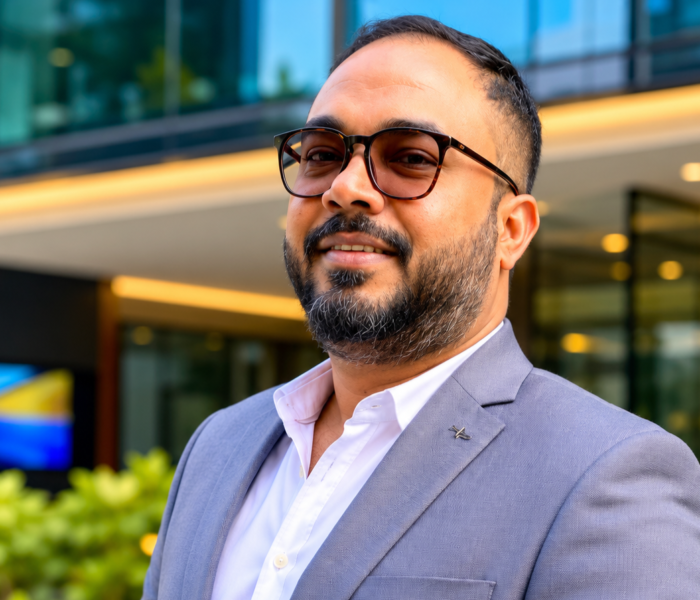

For a PropTech platform operating across Singapore, Malaysia, Thailand, Vietnam, and Indonesia, technology is the product, but culture is what makes it work, says Ruth Kerr, Head of People & Culture at PropertyGuru Group.
Last updated:
The PropTech sector has spent years debating the right technology stack. The harder conversation, how the companies behind those platforms actually hold together as they scale across markets, languages, and product lines, is only now getting the attention it deserves.
PropertyGuru Group is one of the few property platforms in the region operating at a scale where that question becomes existential. Headquartered in Singapore, the group runs consumer property search, mortgage marketplace, data, and software solutions across Singapore, Malaysia, Thailand, Vietnam, and Indonesia. At that size, building the product is not the constraint. Building the organisation that can keep evolving the product is.
Ruth Kerr, Head of People & Culture at PropertyGuru, puts it plainly when she says, “Create What’s Next reflects that change is not only inevitable, but something we must actively harness,” describing the internal philosophy that anchors the group’s culture in a sector where standing still is not an option.
Leading Through Change With Purpose
For PropertyGuru’s roughly 1,500 employees, known internally as “Gurus,” change is not framed as disruption. It’s framed as the work itself.
Continuous learning sits at the centre. Kerr describes a culture built around equipping teams with future-ready skills, supported by open communication that lets employees feel confident navigating transitions. Leadership development is intentionally shaped around the same mindset, with managers expected to encourage Gurus to embrace innovation, experiment, and share what they learn across teams. Small wins are celebrated visibly. Contributions are recognised.
The point Kerr returns to throughout the conversation is balance, agility never coming at the cost of connection. For PropTech firms scaling rapidly across markets, that balance is the operational difference between sustained growth and the cultural drift that often accompanies it.
Building Belonging Across Borders
For multi-country PropTech platforms, the people challenge is partly philosophical and partly logistical. Teams sit in different cities, work in different languages, and ship to different consumer markets. The shared identity has to be deliberately designed, not assumed.
PropertyGuru anchors its identity in an employee value proposition, Be More, Be A Guru, that the company says it actively reinforces through company-wide initiatives and what Kerr describes as “tentpole events” where Gurus across regions come together. The vision, mission, and values are not treated as wall-poster artefacts but as live frameworks reinforced through repeated touchpoints.
Inclusive communication matters here too. Kerr emphasises creating space for employees to contribute ideas, learn from one another, and celebrate success collectively. The underlying argument: belonging at scale is not a function of office design, it is a function of deliberate, repeated, communication architecture.
Connecting Work To Real Impact
For employees of a property platform, the work has unusual emotional weight. Buying or renting a home is among the most consequential decisions in most people’s lives, and PropertyGuru’s product touches that decision daily. The challenge for the people function is making that downstream impact visible to employees whose day-to-day work is product, data, engineering, or operations.
The company addresses this directly by surfacing customer stories at town halls, in newsletters, on internal platforms. Initiatives like Everyone Welcome champion inclusivity in the home search journey, reminding employees of the broader social effect their work has. Recognition reinforces the link: when contributions are celebrated, the connection between individual work and platform-level impact becomes harder to lose.
For PropTech firms more broadly, this is one of the more replicable insights in PropertyGuru’s model. Connecting daily work to user outcomes is comparatively easier in property than in many other categories. Most firms simply don’t do it deliberately enough.
Designing Everyday Engagement
PropertyGuru’s engagement strategy is not built around an annual survey. It’s built around continuous, structured listening: pulse surveys, open forums, roundtables, fireside chats. Kerr describes this as creating safe spaces for Gurus to voice opinions and concerns directly to leadership.
The practical expression of that culture varies by location. In Singapore, Thrive Thursdays bring employees together for breakfasts, sports sessions, and informal gatherings, moments for connection that the company says strengthen relationships across teams. Flexible work arrangements, wellness programmes, and learning opportunities are continuously refined based on employee feedback rather than set on annual review cycles.
What This Means For The Wider PropTech Sector
For the UAE and GCC PropTech sector, currently in its sharpest growth phase, PropertyGuru’s experience offers a usable framework. As regional platforms scale from single-country to multi-country operations, from consumer search to mortgage and data products, the operating challenge shifts from technical execution to organisational design. Culture, belonging, and continuous learning move from HR functions to commercial functions. They become how the platform competes.
Source
Source: Interview material with Ruth Kerr, Head of People & Culture, PropertyGuru Group, originally published in Employee Happiness Daily (April 2026 Edition).
“`