
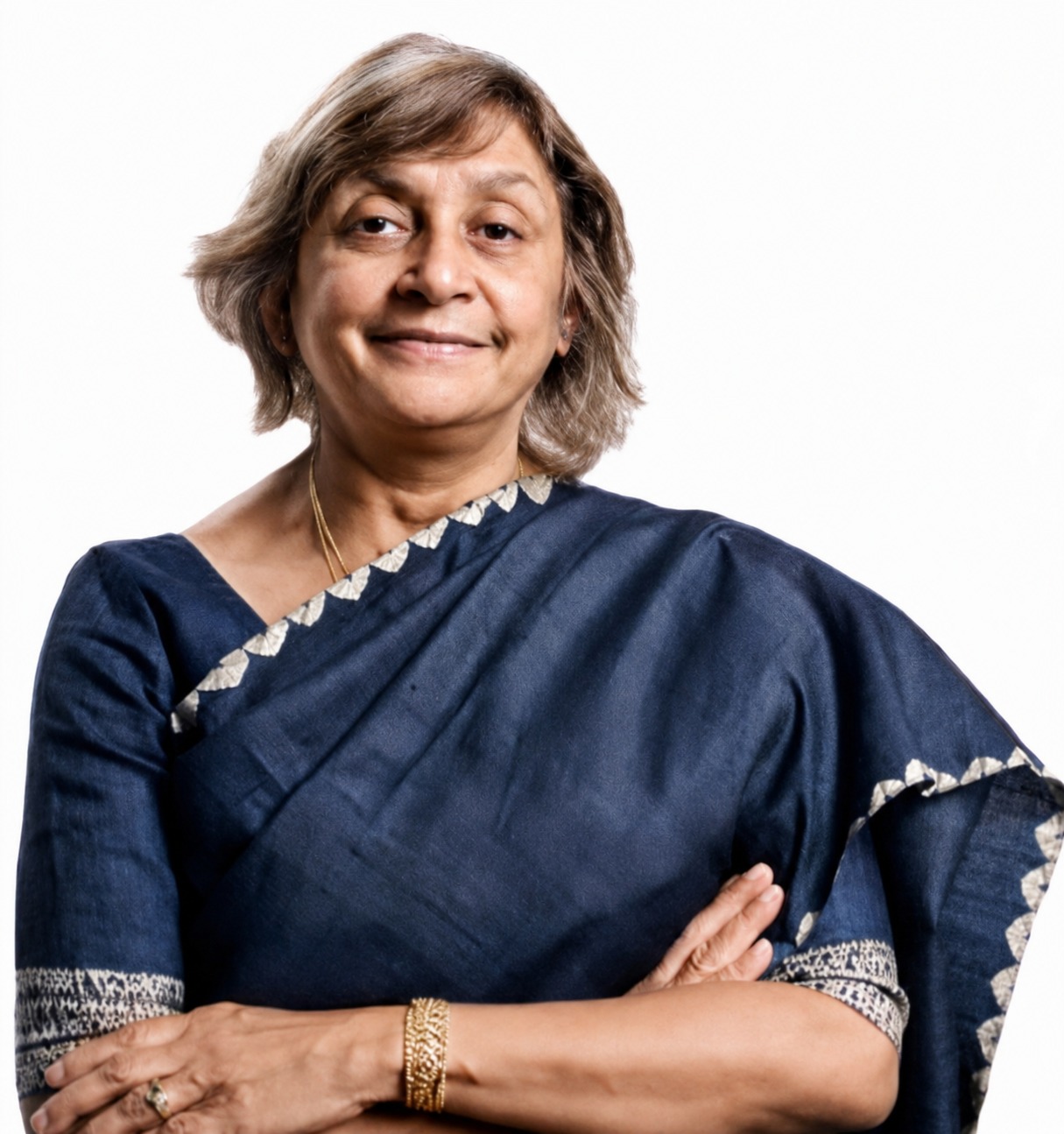
Anju Madeka, President and CFO of Bengal Aerotropolis Projects Limited, is a turnaround specialist. She does not seek stable environments, she seeks the ones no one else wants to fix.
Last updated:
Anju Madeka has spent her career doing what most finance leaders avoid, walking into organisations under pressure, navigating crises that test every dimension of leadership, and building for the long term. From FMCG and petrochemicals to large-scale infrastructure, her career has been defined not by the sectors she has worked in, but by what she has been asked to do within them: stabilise, transform, and deliver.
What has remained constant across every sector you have led?
Across sectors, the constants are always hard work, a focused approach, result-oriented time-bound execution. Leadership fundamentally means building trust, making informed decisions, and aligning people around a shared objective. I have always believed that finance is not merely about numbers; it is about enabling sustainable growth and creating long-term value.
What has also remained constant is my willingness to step beyond conventional functional boundaries. The ability to remain calm in complex criticalities, breaking down issues into smaller achievable segments, to solve step by step, while keeping the focus on results, has been central to my leadership approach.
What draws you to turnarounds, and what do they demand of a leader?
Transformation environments demand clarity, resilience, and decisiveness, which is precisely what makes them intellectually and professionally rewarding. Turnarounds require far more than financial restructuring. They demand the ability to understand people, rebuild confidence, and establish a culture of accountability.
A leader must be comfortable making difficult decisions while still inspiring optimism within the organisation. During periods of disruption, consistency in communication and credibility in action become critical. People follow leaders they trust; you must walk the talk.
How do you build the institutional trust that makes large-scale funding possible?
Investors and institutions are not only evaluating the viability of the project, but also the quality of governance, leadership stability, and execution capability behind it. My approach has always been rooted in transparency, preparation, consistency, and not taking any shortcut approach.
Institutional trust is earned by disciplined financial management, realistic projections, and the ability to deliver on commitments. Over time, institutions develop confidence when they see resilience, governance, discipline, leadership, and operational continuity even during challenging phases.
What did navigating COVID and a leadership transition simultaneously teach you?
That period tested every dimension of leadership concurrently. The aviation and infrastructure sectors were among the hardest hit during COVID, and at the same time, we were navigating significant organisational and leadership transitions.
The immediate priority was ensuring operational continuity while safeguarding financial stability and employee morale. Leadership cannot operate through hierarchy alone; it requires team building and collective confidence-building. I learned that clarity of communication, calm decision-making, and consensus in decision-making become incredibly powerful during uncertainty.
Organisations emerge stronger when they remain focused on long-term purpose and are able to navigate short-term disruption.
What needs to change structurally for women in senior leadership?
The conversation today must move beyond symbolism toward structural change. Organisations need stronger leadership pipelines for women, more equitable access to strategic roles, and ecosystems that support long-term career continuity.
Most importantly, leadership should eventually cease to be viewed through the lens of gender. The objective should be to create institutions where capability, vision, and execution define leadership outcomes. When that happens consistently, women in senior leadership will no longer be seen as exceptions.
What will it take for infrastructure finance in India to match its ambition?
For infrastructure finance in India to mature meaningfully, we need deeper long-term capital pools, stronger risk-sharing frameworks, and more patient investment structures. Equally important is policy continuity and institutional coordination. Investors seek predictability, transparency, and efficient execution ecosystems.
The opportunity ahead is extraordinary. The challenge now is to build financial ecosystems that are as ambitious and future-oriented as the infrastructure vision itself.