Last updated:
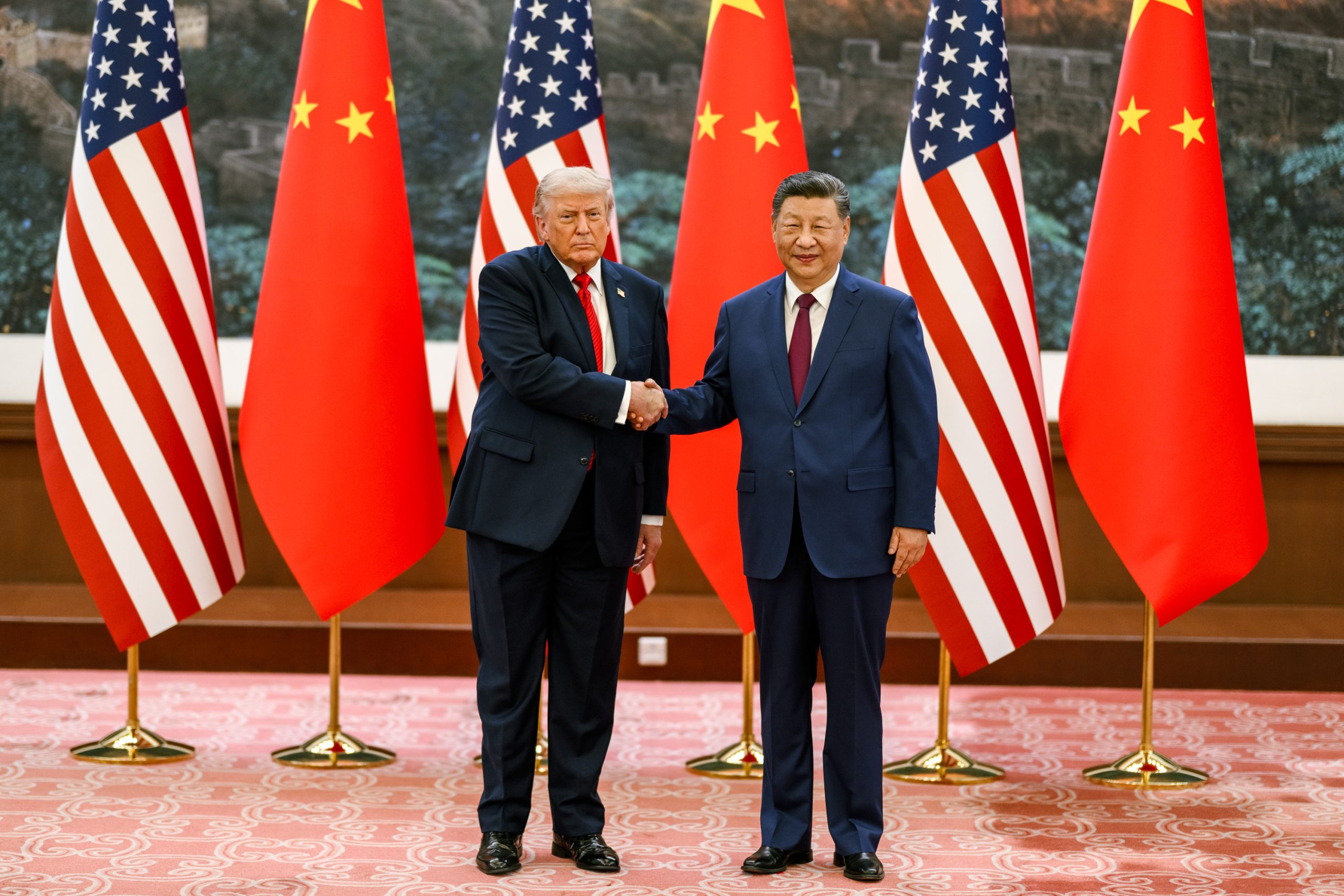
When Donald Trump landed in Beijing on May 14 for his first visit to China since 2017, the world watched for signals on trade, Taiwan, and the Iran war. Two days later, the outcome was predictable: the world’s two largest economies agreed, for now, to stop making things worse.
For most of the world, that is reassuring. For India and the UAE, two economies that have spent the better part of two years positioning themselves as the primary beneficiaries of the US-China friction, it is a more complicated read.
What Was Agreed
China committed to purchasing at least $17 billion in US agricultural goods annually through 2028. Both sides agreed to set up bilateral boards on trade and investment. Trump and Xi also agreed that Iran must not develop a nuclear weapon and that the Strait of Hormuz, through which roughly a fifth of global oil flows, must stay open. A follow-up meeting is scheduled for September in the US.
The tone was warm. The commitments were limited. As one analyst noted after the summit, both sides describing the meeting as a win reflects goodwill, but not necessarily substance.
What it Means for India
India has spent two years positioning itself as the go-to manufacturing alternative to China, and it has been working. Electronics exports crossed $47 billion in 2025, a 37% jump over the previous year per India’s Department of Commerce, with the sector rising from India’s seventh-largest export category to its third in just five years. Four semiconductor manufacturing plants are slated to begin commercial operations in 2026, deepening that trajectory further.
But a US-China rapprochement reduces the urgency for global companies to diversify away from China, which softens the short-term case for moving production to India. If tariff differentials narrow and supply chains stabilise, the business case for absorbing the friction costs of relocation weakens.
The long-term story has not changed. Supply chain shifts of this scale take years to build and cannot be reversed by one summit statement.
Key Points to Know
- Trump met Xi in Beijing on May 14–15, their second face-to-face since Trump returned to office
- China agreed to buy at least $17 billion in US farm goods per year through 2028
- Both leaders agreed Iran must not get a nuclear weapon and the Strait of Hormuz must stay open
- Trump said Xi personally assured him China “is not going to give military equipment” to Iran, but the pledge does not cover Chinese oil purchases from Iran, which remain Tehran’s economic lifeline
- India’s China+1 manufacturing gains face short-term pressure as US-China tension eases
- The UAE benefits: both superpowers now have a shared interest in Gulf stability, reinforcing the Emirates’ role as a neutral trade and logistics hub
- A follow-up Trump-Xi summit is planned for September 2026 in the United States
What it Means for the UAE
Here, the Iran discussion actually strengthens the Gulf’s hand. The UAE has built its reputation as the region’s neutral commercial hub, trusted by both Washington and Beijing, exposed to neither’s direct conflict. The summit’s shared commitment to a stable Strait of Hormuz and a contained Iran validates exactly that positioning.
It is also worth noting what Xi’s arms assurance does not cover. Trump relayed that Xi told him China “is not going to give military equipment” to Iran, a pledge Trump called “a big statement.” But it stops short of addressing Chinese oil purchases from Iran, which remain Tehran’s primary economic lifeline, and the broader intermediary networks that sustain the regime despite US sanctions. For the UAE, whose trade and security calculations are directly tied to Iranian behaviour, this is a meaningful but incomplete signal.
Both superpowers need the Gulf to remain stable and open. That shared interest does not resolve the Iran question, but it does reinforce the UAE’s position at the centre of it.
The Beijing summit buys China time. It does not restore the confidence that made diversification a strategic priority in the first place and it does not diminish the UAE’s role as the region’s indispensable trade and logistics hub.
Source: White House official readout; CNBC; CBS News; Time Magazine; Fox News; India Department of Commerce (via Business Standard, January 2026); Ministry of Electronics and Information Technology, Government of India