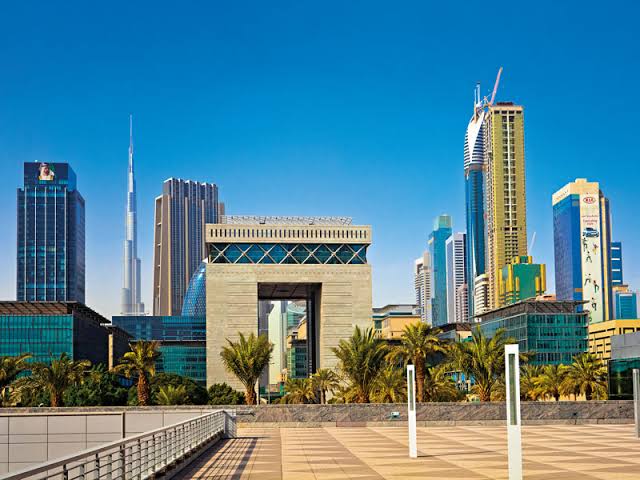
Dubai International Financial Centre has crossed 10,000 active registered companies for the first time, reinforcing Dubai’s position as the region’s leading financial hub and a global gateway for banks, asset managers, insurers, family offices and fintech firms.
Last updated:
At the end of the first half of 2026, DIFC reached 10,018 active registered companies, after attracting 2,318 new active registered companies over the previous 12 months. The 30% year-on-year growth underlines the continued pull of Dubai as a global destination for finance, business, investment and innovation.
The milestone also strengthens DIFC’s role as the leading global financial centre in the Middle East, Africa and South Asia region, at a time when global financial institutions are increasingly looking for stable, well-regulated and growth-oriented markets.
DIFC by the Numbers
| Indicator | H1 2026 Performance |
|---|---|
| Active registered companies | 10,018 |
| New active companies added in 12 months | 2,318 |
| Organic growth in active companies | 30% |
| Regulated financial services firms | 1,134 |
| Banks and capital markets firms | 327 |
| Insurance and reinsurance entities | 165 |
| Wealth and asset management firms | 592 |
| AI, fintech and innovation companies | 1,933 |
| New companies welcomed by DIFC Innovation Hub in H1 2026 | 361 |
| Family-related entities | 1,408 |
| Foundations | 1,409 |
A Milestone for Dubai’s Financial Ambitions
The crossing of the 10,000-company mark is more than a symbolic achievement. It reflects Dubai’s ability to build a financial ecosystem that combines regulation, infrastructure, global connectivity and access to high-growth markets.
DIFC’s growth supports the Dubai Economic Agenda D33, which aims to position Dubai among the world’s top four financial centres. The centre has already risen to seventh place globally in the Global Financial Centres Index, making it the highest-ranked financial centre in the MEASA region.
For global firms, DIFC offers a platform to serve markets across the Middle East, Africa and South Asia while operating within an internationally recognised legal and regulatory framework. This has made it increasingly attractive to banks, hedge funds, asset managers, insurers, family offices and technology-driven financial companies.
Financial Services Growth Across the Ecosystem
DIFC’s expansion in 2026 has been broad-based. Regulated financial services firms grew 16% to reach 1,134, reinforcing the centre’s position as the region’s largest and most diversified financial services ecosystem.
The number of banks and capital markets firms rose to 327, while insurance and reinsurance entities reached 165. Wealth and asset management firms increased to 592, supported by growing demand from global investors, family offices and institutional capital looking for access to regional and emerging market opportunities.
This growth shows that DIFC is no longer only a banking or financial services district. It has become a full-scale ecosystem spanning capital markets, wealth management, insurance, fintech, family business, private wealth and innovation.
Global Firms Continue to Choose Dubai
DIFC’s latest performance also reflects continued confidence from international firms. Several global companies have established regional offices in the centre since the first half of 2025, including Allianz Trade Middle East, Arrowpoint Investment Partners, Bank of Canada, Blue Mountain Capital, Citadel, ICICI Prudential Asset Management Company, JP Morgan International Advisors, Sun Life, QIC, TMF Group and Varenne Capital Partners.
Their presence signals how Dubai is increasingly being used as a strategic base for regional expansion. For many global institutions, DIFC provides proximity to fast-growing markets, a deep talent pool, a strong regulatory framework and a business environment designed for cross-border capital flows.
The Rise of Wealth, Family Offices and Private Capital
One of the strongest areas of growth has been private wealth. Family-related entities at DIFC rose 36% year-on-year to 1,408, while foundations increased 67% to 1,409.
This reflects Dubai’s growing role as a centre for wealth preservation, succession planning and family enterprise growth. As high-net-worth individuals and family businesses increasingly look for stable jurisdictions to structure, manage and protect wealth, DIFC has positioned itself as a regional capital for private wealth management.
The growth of family offices also complements the wider rise of asset managers, private capital platforms and investment advisory firms within the centre.
Fintech and AI Push DIFC Into the Future of Finance
Beyond traditional financial services, DIFC is also building a larger innovation ecosystem. During the first half of 2026, the DIFC Innovation Hub welcomed 361 new companies, taking the total number of AI, fintech and innovation companies to 1,933, a 39% increase year-on-year.
DIFC has also announced its ambition to become the world’s first AI-native financial centre, with artificial intelligence expected to be embedded across regulatory frameworks, business operations, talent development and infrastructure.
This strategy is expected to generate US$3.5 billion, equivalent to AED 12.9 billion, in economic value and create 25,000 jobs. For Dubai, the move reflects a wider effort to ensure that its financial centre remains competitive as AI, digital assets, data, fintech and automation reshape global finance.
Infrastructure Demand Reflects Market Confidence
DIFC’s growth has also translated into strong demand for physical infrastructure. DIFC Square, which will offer 600,000 square feet of space, was fully pre-leased ahead of completion.
The centre’s expansion through DIFC Zabeel District is another sign of long-term demand from companies seeking a base in Dubai’s financial ecosystem. As more global institutions, fintech firms, family offices and asset managers establish operations in the emirate, high-quality office and business infrastructure will remain central to DIFC’s next phase of growth.
Why DIFC’s 10,000-Company Milestone Matters
DIFC’s latest milestone comes at a time when global financial hubs are competing aggressively for capital, talent and regulatory relevance. While traditional centres such as London, New York, Singapore and Hong Kong remain dominant, Dubai has built a distinctive position as a bridge between East and West.
The centre’s growth reflects three major trends: the rise of Gulf financial hubs, the increasing importance of emerging market access, and the shift of global capital toward jurisdictions that offer stability, connectivity and speed of execution.
For Dubai, DIFC is not just a financial district. It is a strategic pillar of the emirate’s economic diversification agenda and a key driver of its ambition to become one of the world’s top financial centres.
Crossing 10,000 active registered companies confirms that DIFC has moved beyond regional relevance. It is now one of the world’s most closely watched financial ecosystems, with the scale, infrastructure and ambition to compete globally.
As financial institutions continue to seek growth beyond mature markets, DIFC’s next challenge will be to sustain this momentum while deepening its capabilities in capital markets, AI, private wealth, fintech and global investment flows.
Source: Reuters, DIFC, Government of Dubai Media Office