



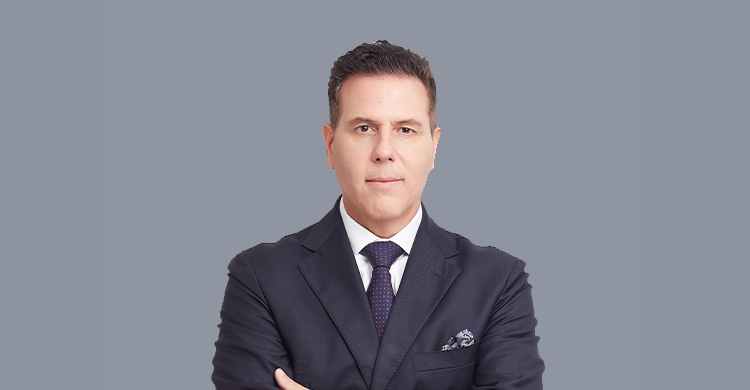

For Corrado Giaquinto, leadership has always been a blend of curiosity, creativity, and relentless problem-solving. “I am the son of a music prodigy, and that creativity has been the fulcrum of my life,” reflects the CEO and Executive Director of Rojukiss International PLC. Curiosity propelled him to travel across 80 countries, live in 10, speak six languages, and immerse himself in diverse cultures, sports, cuisines, and experiences. These adventures made him a cross-cultural strategist and a leader capable of navigating complex, global business landscapes.
Over 33 years, Giaquinto has built and transformed businesses in multiple markets, often entering turnaround situations or creating entirely new categories. His approach combines strategic clarity, cultural intelligence, and an unwavering focus on people. He starts with understanding teams, identifying missing roles, and designing the organization for success. A rigorous 90-day diagnostic, followed by a five-year strategy and prioritization of 2–3 initiatives that deliver disproportionate value, ensures focus, efficiency, and results.
Across markets and continents, Giaquinto has honed an approach that balances discipline with creativity, autonomy with accountability, and strategy with execution. In this candid conversation with Business Frontier, he reveals the philosophies, frameworks, and lessons that have shaped him into a global leader.
Q. Can you share your professional journey and some pivotal moments that influenced the leader you are today?
Over 33 years, I’ve worked across 10 countries, often stepping into turnaround situations or creating new market categories. These experiences taught me that leadership begins with people: understanding teams, creating missing roles, and shaping organizational design. I start with a 90-day diagnostic plan to identify core issues and craft a five-year strategy. The key is ruthless focus on two or three initiatives that drive disproportionate value, eliminating wasted effort, and simplifying operations. By aligning strategy with execution and empowering teams, I’ve built robust organizations that consistently deliver results. Every challenge reinforced the importance of clarity, adaptability, and the courage to innovate.
Q. Living in 10 countries and speaking six languages gives you a rare global lens. How do cultural insights shape your approach to building and managing international teams?
One leadership style does not fit all. Cultural intelligence is essential. I always start humble—listening, observing, and learning the local context before acting. Cross-cultural training and careful observation help decode subtle nuances in behavior, decision-making, and communication. If you enter a team like an armored tank, you risk more damage than progress. Instead, adaptability allows me to build trust, foster collaboration, and guide teams effectively, regardless of geography. This approach has been critical in creating global, interconnected organizations that respect local contexts while pursuing a unified vision.
Q. How do you cultivate a culture of creativity and curiosity within your organization?
Culture begins with the leader. If I continue learning, questioning, and exploring new ideas, my team follows suit. I encourage active listening, curiosity, and asking questions in meetings. Colleagues are given space to experiment, make mistakes, and learn. Ambitious but unstructured objectives allow them to design their own solutions while remaining aligned with strategic goals. This combination of freedom and accountability fosters curiosity, creative problem-solving, and innovation, creating a workplace where learning and experimentation are celebrated rather than penalized.
Q. What personal philosophy guides you when building or transforming a business?
My leadership philosophy is anchored in ten principles: strategy first, build strong teams, do what’s right over what’s easy, focus on the 20% that drives 80% of results, gather information and listen, make fast and simple decisions, execute relentlessly, communicate continuously, maintain work-life balance, and enforce strong governance. These are practical tools, not abstract ideals. They guide every decision, shape culture, and ensure organizations remain aligned, disciplined, and adaptable. Over time, applying these consistently has been central to building high-performing businesses across diverse markets.
Q. As a CEO, how do you define effective leadership in today’s fast-changing business environment?
Effective leadership is about turning strategy into execution while fostering alignment and momentum. Develop a strategy that can last five years, break it into a few critical initiatives, and set up frameworks to monitor progress. Build strong, interconnected teams, leverage technology, and embed culture as the glue. Communication must be consistent and two-way. A leader’s role is to simplify complexity, prioritize focus areas, and empower teams to achieve ambitious goals. This combination of clarity, accountability, and cultural insight drives sustainable performance.
Q. How do you balance innovation with authenticity in maintaining consumer trust?
We rely on two guiding frameworks: a brand pyramid and a clear values and ethics system. These define how we communicate and innovate, ensuring consistency across all touchpoints. Innovation is welcomed as long as it aligns with our brand essence and values. By embedding these frameworks in every decision, we maintain authenticity while remaining agile enough to introduce new products, services, or experiences that resonate with consumers and uphold trust.
Q. What advice would you offer to the next generation of professionals aiming to lead and make an impact?
Success requires long-term vision and sacrifice. Instant gratification doesn’t work in real life. Technology, including AI, can augment your thinking but cannot replace judgment, creativity, or intuition. Most importantly, integrity matters: don’t cut corners or cheat—you will pay for it eventually. Build patience, curiosity, and resilience, and focus on consistently delivering value over time. Leadership is a marathon, not a sprint.
Q. Looking ahead, what personal and professional goals are you most excited about achieving in the next few years?
I aim to transform Rojukiss into a global brand, targeting 4 billion baht in revenue by 2030, with at least 20% from international markets. Beyond numbers, my goal is to continue developing state-of-the-art organizations, nurturing talent, and creating a culture that celebrates curiosity, creativity, and problem-solving. The challenge excites me: building a brand that resonates globally while staying true to its core values.