




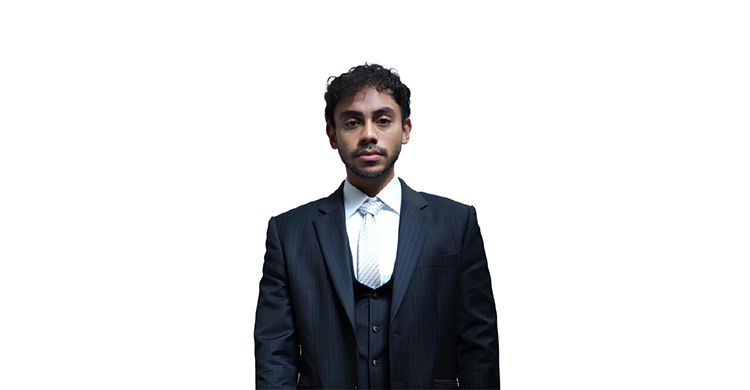

As cities face rapid urbanisation, architecture increasingly plays a role in shaping economic development as well as physical space. Muhammad Rafi Haikal serves as Director of ASEAN Business Development at Urbahn Architects PLLC in New York and as Partner and President Commissioner at PT. Urbahn International PMA in Jakarta, where he works on projects spanning the United States and Southeast Asia. In this conversation with Business Frontier, Haikal reflects on leadership across different design systems and the opportunities emerging from ASEAN’s urban expansion.
Q. How has your international experience shaped your leadership approach in architecture and development?
Working between New York and Southeast Asia fundamentally reshaped the way I think about leadership in architecture. In New York, while working with Urbahn Architects PLLC, I was exposed to a structured design environment where interdisciplinary collaboration, regulatory rigor, and sustainability standards drive the process. Projects operate almost like complex ecosystems, with engineers, planners, consultants, and community stakeholders contributing to a shared framework. However, when working in Southeast Asia, especially Indonesia, the reality is different. Systems are often less standardized, regulatory enforcement can be inconsistent, and cultural context plays a greater role in shaping the built environment.
My leadership approach is a balance of being structured and adaptive, shaped by navigating these contrasting environments. I have realized that international architectural work is not about applying a one-size-fits-all model but about translating global standards into locally relevant solutions.
Q. In what ways can architecture serve as a driver of economic growth and national competitiveness?
While architecture is often viewed as an aesthetic discipline, it is closely connected to economic systems and national development. The design of cities can influence tourism, productivity, investment flows, and quality of life. For example, hospitality developments such as the SO/ Sanur Resort project demonstrate how architecture can stimulate economic growth. Well-designed hospitality infrastructure attracts international visitors and generates employment. More broadly, architecture also shapes how a country competes globally. Cities that invest in sustainable infrastructure, urban planning, and distinctive architecture tend to attract investment and talent.
Q. What leadership challenges have you faced in cross-border ventures, and how did you overcome them?
One of the most significant leadership challenges I faced occurred while working on a large civic infrastructure project in New York during the COVID-19 pandemic. At one point, the project involved more than 30 consulting firms, each operating with different technical languages, expectations, and workflows. The biggest challenge was not technical; it was communication. I had to translate across disciplines, shifting between engineering language, lighting design terminology, and planning frameworks depending on the audience. Over time, I realised that successful leadership in cross-border ventures depends on the ability to build trust, structure collaboration, and translate across professional cultures.
Q. How do you balance commercial objectives with social impact in large-scale projects?
Balancing commercial objectives with social impact begins with recognising that the two goals do not necessarily conflict. Projects that generate strong social value often produce more resilient economic outcomes. For example, while working on civic infrastructure projects, we explored ways to integrate public and community-oriented spaces within the architectural program. My approach is to treat architecture as a system where economic viability supports the project’s longevity while design benefits users and communities.
Q. What major opportunities and risks do you see in ASEAN’s urban expansion?
ASEAN is experiencing one of the fastest urban expansions in the world, creating both opportunities and risks. Rapid urbanisation provides a chance to rethink how cities are designed. Countries across Southeast Asia are investing heavily in infrastructure and tourism development. Initiatives such as Nusantara reflect attempts to redefine national urban identity. However, rapid growth can also lead to uncontrolled sprawl, environmental degradation, and infrastructure gaps. The challenge for architects and planners is therefore not simply to build more cities, but to build better systems for how cities evolve.
Q. What advice would you give to young professionals aiming to become global design leaders?
The first piece of advice I would give is to remain attentive to how people experience space. Architecture shapes environments that influence behaviour and social interaction. Second, young professionals should not be afraid of intellectual friction. Some of the most transformative moments in my education occurred when my ideas were challenged. Third, architecture today operates beyond the boundaries of design. Global design leaders must navigate policy, economics, sustainability, and cultural context. Finally, young designers should think not only about individual buildings but also about the systems that shape how cities are built.