



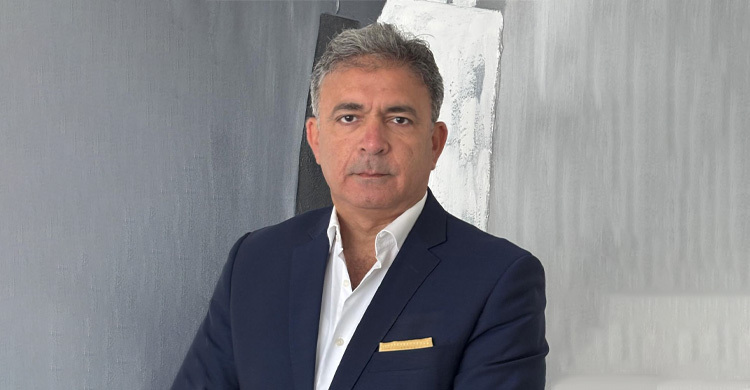

With over two decades of leadership across the Middle East’s hospitality landscape, Mrad El Khoury has built a reputation as a transformative force in hotel operations, asset management, and guest experience strategy. From rebranding legacy properties to launching new hotel concepts from the ground up, his approach merges hands-on leadership with a sharp strategic vision.
Currently based in Saudi Arabia, Mrad served previously several roles in the hospitality industry and recently as a head of hospitality and asset management—a role that gives him unique insight into balancing operational performance with brand value and guest satisfaction. Known for his ability to lead high-performing teams and embrace future-forward innovations, he sees the hospitality industry at a tipping point—where data, technology, and emotional intelligence must coexist.
In this exclusive interview with Business Frontier, El Khoury, Senior Head of Hospitality, reflects on the challenges and opportunities shaping modern hospitality, the principles behind his leadership philosophy, and why the next great hotel experience will begin before you even say a word.
Q. You’ve led multiple hotel openings and rebranding efforts across your career. What do you consider the most critical success factor in ensuring a smooth and impactful launch or transition?
A hotel opening or rebranding is never just a checklist of operational tasks — it is a transformation that must be lived and led with clarity. The success of such an initiative hinges on strong planning, but also on agile leadership. Every element—from licensing, IT systems, and procurement, to recruitment, budgeting, and marketing—has to be managed like a symphony. It is about getting the critical path right and ensuring every milestone is tracked with discipline.
But beyond the technical aspects, it is about uniting people. You need to empower department heads, communicate transparently with stakeholders, and keep the entire team aligned with the vision. No amount of planning works without buy-in from those executing it on the ground. At the heart of a successful launch is trust, structure, and real-time adaptability.
Q. As an owner representative and senior executive in hospitality, how do you balance operational efficiency with delivering consistently exceptional guest experiences?
It is a responsibility that requires both strategic clarity and emotional intelligence. On one hand, you are ensuring that operations run like clockwork—costs are controlled, systems are optimised, and teams are performing. On the other hand, you are also curating moments that guests will remember and come back for.
I believe these two objectives are not in conflict; they can complement each other. It starts with building a culture that respects both sides of the coin. You use data and performance metrics to track efficiency, but you also stay close to the guest journey to understand where meaningful experiences are created. Technology helps—CRM platforms, smart check-ins, automated back-of-house systems—but it cannot replace genuine hospitality. The goal is always to remove friction operationally while leaving room for surprise and delight. That is where leadership steps in: knowing where to automate and where to personalise.
Q. In your view, what are the biggest challenges facing hospitality asset management today, and how can operators adapt to meet them?
Hospitality asset management today operates in a landscape that is far more complex than it was a decade ago. We are seeing economic volatility, political tensions, conflicts, shortage of hospitality staff, fast development of AI tools, rising operational costs, and evolving guest expectations that demand greater personalisation and sustainability—often without a corresponding willingness to pay more. That puts tremendous pressure on profitability.
One of the biggest tensions is the misalignment between ownership expectations—focused on ROI—and brand requirements, which may involve costly property improvement plans or tech upgrades. Bridging that gap requires transparency, strategic planning, and compromise. Operators need to present well-thought-out proposals that show how brand compliance or new tech investments will enhance the guest experience and improve long-term value. It is about connecting performance with purpose.
Q. You’re known for being an inspiring leader. What principles or habits do you follow to build high-performing teams, especially in a dynamic industry like hospitality?
It starts with showing up. Leadership is not just about making decisions from behind a desk—it is about being present, especially during peak hours or moments of stress. When your team sees you involved, listening, and leading with integrity, this sets the tone for the entire culture.
I also believe in empowering people. I give my team clear goals and the autonomy to find the best ways to achieve them. That trust builds confidence, and confident teams take initiative. Feedback is another cornerstone—constructive, consistent, and rooted in growth. I celebrate wins, big or small, and I listen deeply, not just to what is said, but also to what is left unsaid.
Hospitality is emotional work. That is why empathy, communication, and recognition matter just as much as KPIs. When you create an environment where people feel valued and involved, performance naturally follows.
Q. With shifting guest expectations post-pandemic and the rise of digital-first travel experiences, how is the role of hospitality leadership evolving?
The traditional model of leadership—structured, hierarchical, and efficiency-driven—is evolving into something more human and adaptive. Today’s leaders must be emotionally intelligent, digitally fluent, and resilient under pressure. Guests expect seamless digital experiences, but they also crave connection. Similarly, staff look for workplaces that value well-being, flexibility, and purpose.
As leaders, we must create ecosystems where both can thrive. That means investing in training, embracing smart technologies, and fostering a culture of inclusion and continuous learning. Decision-making has become faster, more data-driven, and more collaborative. And increasingly, we are being called upon to lead not just operations, but conversations around sustainability, diversity, and ethical impact. It is a broader role—one that demands both vision and empathy.
Q. Looking ahead, what trends or innovations do you believe will define the future of hotel operations and guest experience in the next 5–10 years?
We are moving towards an era where hotels will become intuitive, intelligent environments.
AI and IoT will create personalised experiences the moment a guest walks in—through facial recognition, adaptive lighting, and room environments that respond to mood or preference. Robotic automation will support service delivery in areas like luggage handling or room service, freeing human staff to focus on higher-touch moments. In fact, AI-driven hotels will know guests and adapt to their needs.
At the same time, sustainability will become non-negotiable. Zero-energy buildings, water recycling, and eco-friendly materials will shift from optional to expected. Payment methods will evolve too—crypto, NFTs, and next-generation loyalty programs will play a bigger role.
But the real transformation will lie in how these technologies enhance—not replace—human connection. The most successful hotels of the future will know who you are, what you need, and how to delight you—often before you even ask. And that, in my view, is where the magic of hospitality truly lies.