



Last updated:
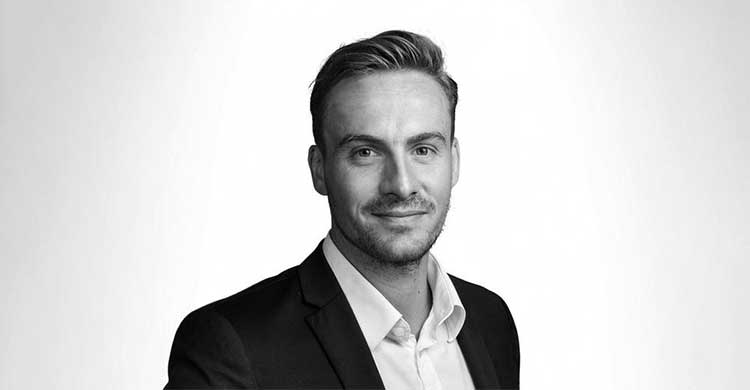
The Strategic Programmes Manager at Climate KIC, one of Europe’s leading climate innovation agencies, Bjarke Kovshøj is a Danish national with a deep-rooted passion for sustainability shaped by his upbringing in one of the world’s greenest countries. Having built a career at the intersection of climate innovation, entrepreneurship, and systems thinking, his early experiences—ranging from academic research in international business with a climate focus to hands-on work with CLEAN, Denmark’s Cleantech Cluster—laid the foundation for his current work driving systemic change and climate action in urban environments.
At Climate KIC, Bjarke plays a pivotal role in developing and managing ‘Innovation Clusters’ in emerging cities, with a special focus on accelerating the topics such as circular economy in high-growth urban centres like Nairobi, Kenya and Bengaluru, India. Currently, he is leading the Circular Economy Innovation Cluster (CEIC) project in Bengaluru, developed by Climate KIC in collaboration with SecondMuse and funded by the IKEA Foundation. The initiative addresses urban waste challenges through upstream innovation, support for informal waste workers, and cross-sector collaboration. The CEIC has already benefited over 130 informal workers (in both Nairobi and Bengaluru) and contributed to carbon dioxide reduction working directly with circular entrepreneurs through the Circular Economy ClimAccelerator.
In an interview with Business Frontier, Kovshøj talks about his journey into climate innovation, the importance of upstream circularity, and how cities like Nairobi and Bengaluru are becoming testbeds for scalable, locally driven circular economy solutions and what it takes to build sustainable, inclusive urban futures.
Q. Can you share a bit about your journey into climate innovation and how you came to focus on circular economy systems in cities like Nairobi and Bengaluru?
I have always been passionate about climate innovation, shaped by growing up in Denmark (a global leader in the green transition). While studying International Business, I focused my coursework on climate innovation whenever possible. During a wave of new green initiatives in Denmark, I landed an internship with the newly launched Cleantech Cluster. That opportunity turned into five years of hands-on climate innovation experience before I moved on to Climate KIC, Europe’s leading climate innovation agency and community.
Climate KIC’s Innovation Clusters strengthen climate innovation ecosystems by connecting different actors who typically work in isolation. These clusters foster collaboration, innovation, and learning to build inclusive and circular economies. They are designed to address systemic challenges at the local level. In cities like Nairobi and Bengaluru, waste is an escalating issue with wide-reaching impacts on areas such as public health and financial resilience. This highlights the urgent need for a shift toward a Circular Economy. In response, Climate KIC, in collaboration with our partners SecondMuse and GrowthAfrica, chose to focus on Circular Economy solutions—leveraging entrepreneurship as a key driver of systemic change.
Q. The Circular Economy Innovation Cluster has been active in two very different urban environments— Nairobi and Bengaluru. What inspired this cross-continental approach, and how does it relate to the future of urban development in emerging markets?
Nairobi and Bengaluru have a lot in common. Both are growing fast and are dealing with more waste as their population increases. At the same time, they have lively entrepreneurial ecosystems and more organisations stepping up on climate action and circular economy initiatives. Finally, informal waste workers play a key role in waste management and circularity in both cities, supporting the everyday collection, sorting, and disposal. However, their role goes beyond keeping the city clean; they possess invaluable expertise and skills that can significantly benefit the economy.
These conditions provided a strong foundation for deploying Climate KIC’s Innovation Cluster concept, which focuses on systems innovation at the local level. By bringing different sectors and entrepreneurs together, we want to speed up the creation of circular solutions. Plus, running this programme in both cities at the same time lets them learn from one another and share ideas. That way, we can build a model that other cities, whether in emerging or developed countries, can replicate and adapt to tackle similar big challenges.
Q. One of your key insights from the initiative is around “upstream circularity.” How could this concept be applied to the real estate and construction sectors in cities like Nairobi, where urban expansion is accelerating?
Upstream innovation refers to designing products and systems in a way that prevents waste from being created in the first place. It focuses on minimising environmental impact early in the product lifecycle, so that products and processes are inherently more sustainable. In rapidly expanding cities like Nairobi and Bengaluru, embedding this mindset into urban development is critical. It calls for meaningful collaboration across sectors—bringing together architects, developers, policymakers, and informal actors—to co-create circular solutions. In the real estate and construction sector, this includes designing for disassembly, using regenerative or low-impact materials, and integrating reuse and recovery strategies into urban planning frameworks. For instance, setting material recovery targets or offering incentives for modular construction can accelerate the shift toward a circular built environment. By aligning actors around upstream innovation, cities can avoid locking in wasteful systems and instead enable long-term, systemic change that is both sustainable and inclusive.
Q. Construction and demolition waste are growing problems in many African cities. Do you see viable circular solutions—such as reuse of materials, modular construction, or design for disassembly—emerging within real estate development?
Nairobi and Bengaluru really show the kind of big challenges a lot of fast-growing economies in Asia, Latin America, and Africa are facing. The real solution comes from their local communities and ecosystems. That’s why Climate KIC’s Innovation Cluster approach focuses on nurturing locally led initiatives. Achieving a Circular Economy—through material reuse, modular construction, and design for disassembly—requires first establishing a clear vision centred on refusing, rethinking, and reducing waste. Equally important is fostering meaningful collaboration among diverse actors who don’t usually work together, including the informal sector, which holds vital knowledge about waste management. Setting us a space where everyone, not just real estate but all industries dealing with waste, can come together and help shape this vision is key to drive systemic change and so lasting change happens.
Q. As cities densify and build more, how can urban planners and real estate developers integrate circular principles early—at the design and planning stage—instead of treating waste as a downstream issue?
Climate KIC contributed to the SUSTAINORDIC project, which explored upstream circularity in the built environment and resulted in the report Redefining Construction – SUSTAINORDIC. While grounded in a Nordic context, the core principles outlined in the report are globally relevant. These include promoting nature-based, circular, and locally sourced materials; advancing gentle demolition practices to enable reuse; and facilitating the redistribution of used construction materials. Additionally, to make these principles work, you need a well-functioning ecosystem, e.g. by ensuring the inclusion of the informal sector as they are a key part of making this transition work. Together, these strategies offer a pathway to reduce environmental impact and build more regenerative, resource-efficient construction systems—principles that can be adapted and applied in cities worldwide, including rapidly growing urban centers like Nairobi and Bengaluru.
Q. Looking towards 2030, what would a circular, climate-smart real estate and urban ecosystem look like in an African city like Nairobi—and what shifts need to happen now to make that vision a reality?
I think it begins with a mindset shift. All actors involved need to see why circular solutions matter and what they can actually achieve. This has to be followed by a strong local push to build new forms of collaboration, including partnerships beyond the traditional real estate sector. We need a strong pipeline, one that brings together early- and late-stage startups, investor support, and enabling policies to truly nurture innovation. It’s also important that this work happens locally. In fact, there are a lot of promising local initiatives happening right here in Nairobi and Bengaluru. What’s needed is a unifying, locally grounded vision that channels collective efforts towards upstream innovation. These cities, with their dynamic ecosystems, are uniquely positioned to lead and to develop scalable, transformative solutions by 2030 that inspire globally.