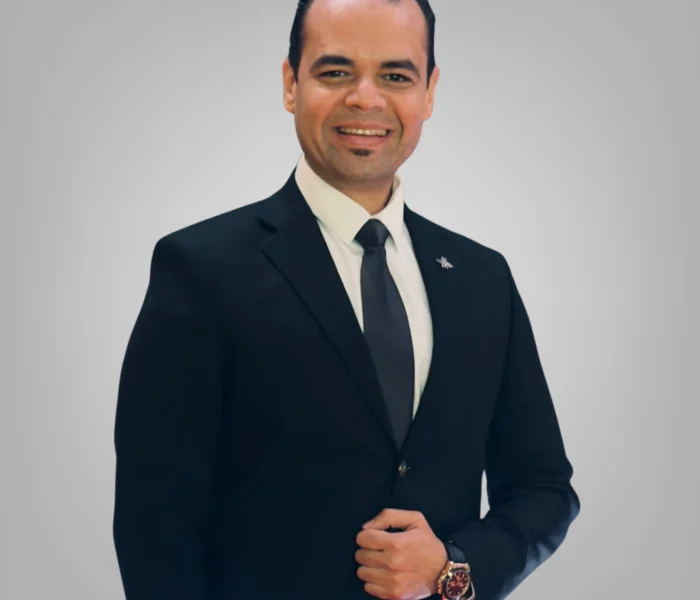
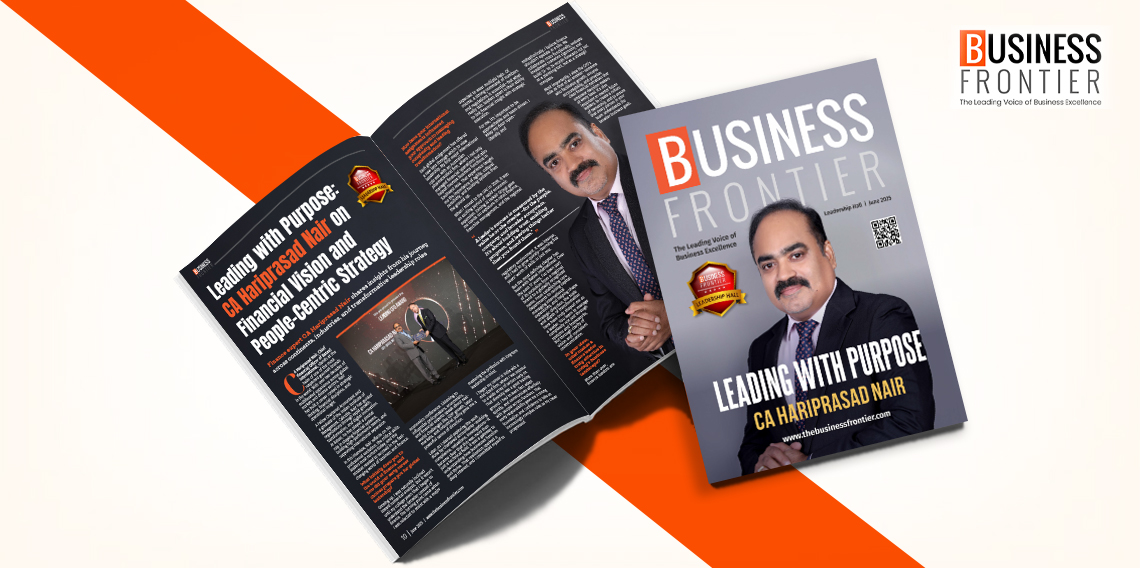
CA Hariprasad Nair, Chief Financial Officer of Bateel International, stands at the helm of one of the most respected gourmet brands in the world. With over two decades of multifaceted experience across global markets and diverse sectors, Nair has built a career rooted in strategic thinking, financial discipline, and operational insight.
A Fellow Chartered Accountant and a graduate of the Indian Institute of Management, Calcutta, Nair has guided organizations through rapid growth, transformation, and digital innovation. At Bateel, he has played a pivotal role in shaping financial systems, building high-performance teams, and supporting international expansion.
In this interview, Nair reflects on his professional evolution, the critical skills leaders must nurture today, and the mindset needed to succeed in the fastchanging world of business and finance.
Q. What initially drew you to the world of finance, and how did your early career choices prepare you for global leadership?
Growing up, I was naturally inclined toward numerical analysis, but it wasn’t until my college years that I began to understand the broader context of finance. The turning point came when I was selected to assist with a major economics conference. Listening to influential policymakers, economists, and financial experts speak about realworld challenges like GDP growth, labor markets, and industrial policy gave me a powerful sense of direction.
Later, as I started exploring the work done by chartered accountants—auditing, compliance, valuations, investigations—it became clear that this was more than just a technical field. It was a gateway to understanding how businesses function and thrive. That realization sparked a deep interest, and I committed myself to mastering the profession with long-term leadership in mind.
I began my career in India with a mid-sized firm, where I was exposed to a wide array of sectors early on. That diversity was a great training ground. I had to learn fast, adapt quickly, and communicate effectively with people across functions. That early responsibility gave me a strong foundation and confidence to take on increasingly complex roles as my career progressed.
Q. How have your international assignments influenced your approach to managing complexity and leading transformation?
Each global assignment has offered a new lens through which to view leadership. My first major international role was with an Australian pharmaceutical firm, where I not only managed financial operations but also helped oversee business functions in Southeast Asia. That experience taught me the importance of agility, cultural sensitivity, and building systems from the ground up.
When I moved to the UAE in 2006, it was an exciting period of rapid economic expansion. Joining Al Hokair Group gave me hands-on exposure to retail finance, franchise management, and the regional regulatory environment. It was intense, and I had to grow quickly—learning five years’ worth of skills in just one.
But the most defining chapter has been with Bateel International. Over the past 17 years, I’ve been part of its evolution from a regional brand to a globally recognized name. From establishing core departments to raising capital, managing international expansions, and helping shape strategic direction, the scale and depth of transformation here have truly shaped me as a leader. You learn to manage complexity not just through systems and frameworks, but through clarity of vision and consistent communication.
“A leader’s success is measured by the value he or she creates —for the people, company, and broader ecosystem. It’s about building trust, enabling progress, and leaving things better than you found them.”
Q. In your view, what makes a finance leader truly effective in today’s business landscape?
More than ever, finance leaders are expected to wear multiple hats. Of course, a strong command of numbers and regulations is essential—but what really sets leaders apart is their ability to link financial insight with strategic execution.
For me, it’s important to be approachable and team-driven. I keep my door open— literally and metaphorically. I believe finance shouldn’t operate in a silo. We collaborate cross-functionally, evaluate investment scenarios rigorously, and build 12- to 24-month forecasts not just as a planning tool, but as a strategic compass.
Most importantly, I view the CFO’s role as that of an enabler—someone who facilitates growth, ensures accountability, and provides clear financial narratives that empower decision-makers at every level. It’s also important to mentor future leaders, to create a culture of ownership, and to ensure that every person in your team understands the broader business goals
Q. Technology is transforming finance at an unprecedented pace. How are you preparing your teams for this shift?
We’re not just adapting to change— we’re actively driving it. One of the more unconventional decisions we took at Bateel was to align the IT department with the finance function. While this isn’t the norm, our CEO recognized that my practical understanding of systems made me a good fit to lead that integration.
We immediately brought in strong IT leadership and set a clear mandate: make technology a growth engine, not just a support function. We’ve since focused on digitizing workflows, automating finance operations, and enabling real-time data analytics. This includes everything from supplier payments and collections to salary processing and business intelligence dashboards.
On the production side, we’re introducing AI-driven automation to improve efficiency, reduce manual input, and enhance quality. It’s a bold path, but it’s necessary if we want to stay ahead of industry disruptions and deliver excellence at scale. We also ensure our team is consistently upskilled—be it through professional development programs or cross-functional projects.
Q. How do you define success as a leader, and what qualities do you believe emerging finance professionals must develop?
For me, a leader’s success is measured by the value he or she creates —for the people, company, and broader ecosystem. It’s about building trust, enabling progress, and leaving things better than you found them.
To the next generation of finance professionals, I would say: Never stop learning. Your degree or designation is only the beginning. Develop a deep understanding of your industry, stay current with global trends, and continuously invest in both technical and soft skills.
Leadership is not just about making decisions—it’s about influencing outcomes, communicating clearly, and adapting under pressure. Those who combine financial intelligence with empathy, curiosity, and resilience will find themselves well-equipped to lead in any environment. Be open to change, and always prioritize integrity.
Q. How has your family influenced your journey as a leader, especially during times of uncertainty or pressure?
Family has been the quiet force behind every milestone I’ve reached. From the values instilled in me by my parents to the unwavering support of my wife and children, their presence has been my foundation.
There have been demanding phases, especially during crises like the COVID-19 pandemic, where the pressure on leadership was immense. But my family’s understanding allowed me to stay focused and fully committed to my responsibilities. Their encouragement gave me the clarity and emotional strength to navigate through intense professional demands while staying grounded.
In many ways, they are my compass— and their belief in me continues to inspire how I lead and how I show up every day. Having that emotional support has been as vital as any professional credential.
Q. What keeps you motivated today, and what legacy would you like to leave behind?
What keeps me going is the opportunity to contribute meaningfully. Every challenge is a chance to grow, and every decision has an impact—on people, performance, and purpose. I am particularly driven by the prospect of building something sustainable, where people feel empowered and proud of what they do.
As for legacy, I’d like to be remembered as someone who built with integrity, led with empathy, and never stopped learning. I hope to leave behind teams that are stronger, systems that are scalable, and a culture that values people as much as performance.