
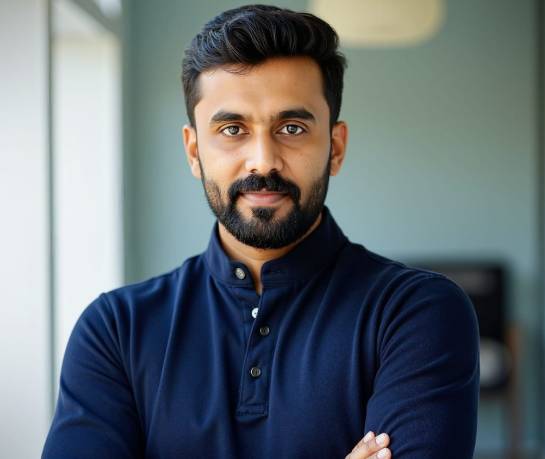
Aromal Ajith, Regional Sales Head at CryptoBind by JISA Softech, has spent his career at the intersection of cybersecurity and business strategy. He emphasises that the organisations that will lead the next decade are not the ones spending the most on security but the ones integrating it most intelligently.
Aromal Ajith, Regional Sales Head at CryptoBind by JISA Softech, has spent his career at the intersection of cybersecurity and business strategy. He emphasises that the organisations that will lead the next decade are not the ones spending the most on security but the ones integrating it most intelligently.
Aromal Ajith has watched organisations invest heavily in cybersecurity while treating it as a compliance exercise rather than a business enabler. Working across India and the MEA region, his conviction is straightforward: data protection is no longer a technical conversation, it is a leadership one.
WHAT PRINCIPLES GUIDE YOUR LEADERSHIP, AND WHAT SHAPED THEM?
My leadership philosophy is centred on trust, accountability, and enabling people to perform at their best. I believe strong leadership is not only about directing teams, but about creating clarity, removing obstacles, and helping individuals grow while aligning everyone toward a common objective. These experiences taught me the importance of staying calm under pressure, making transparent decisions, and maintaining accountability even when circumstances are difficult. I see leadership as a responsibility to create both business success and professional growth for the people around me.
WHAT OPPORTUNITY IN CYBERSECURITY DO YOU THINK LEADERS ARE STILL MISSING?
Many organisations still approach cybersecurity mainly as a defensive or regulatory function, something driven by audits, penalties, or risk avoidance. The real opportunity is using security and data governance as a strategic advantage that improves customer trust, accelerates digital transformation, and enables faster business growth. The organisations that will lead the next decade are not necessarily the ones spending the most on security, but the ones integrating security intelligently into their business strategy from the beginning.
Cybersecurity and data protection are no longer purely technical discussions; they are leadership and business discussions.
WHAT WAS THE MOST DEFINING DECISION YOU MADE AND WHAT DID IT TEACH YOU?
One of the most defining decisions I made was prioritising long-term customer trust and solution alignment over short-term commercial gains during a critical enterprise engagement. I recommended starting with a focused deployment approach instead of pushing an aggressive expansion immediately. While this initially reduced the short-term scope, it significantly increased customer confidence and ultimately created a much stronger long-term partnership. Sustainable success comes from solving the right problem, not just closing the fastest opportunity.
WHAT STRATEGIC SHIFTS WILL DEFINE YOUR ORGANISATION’S NEXT PHASE OF GROWTH?
One of the key priorities will be expanding beyond traditional infrastructure security into comprehensive data protection strategies. Another major strategic shift is moving from product-led engagements to solution-led and advisory-driven partnerships. Customers today expect cybersecurity providers to understand regulatory frameworks, operational workflows and business risk, not just technology deployment.
WHAT DO YOU WANT OUR READERS TO TAKE AWAY?
Cybersecurity and data protection are no longer purely technical discussions; they are leadership and business discussions. The organisations that succeed in the coming years will be the ones that treat trust, privacy, and resilience as core business values rather than compliance checkboxes. Technology evolves quickly, but strong relationships, ethical decision-making, accountability, and continuous learning remain timeless qualities.