


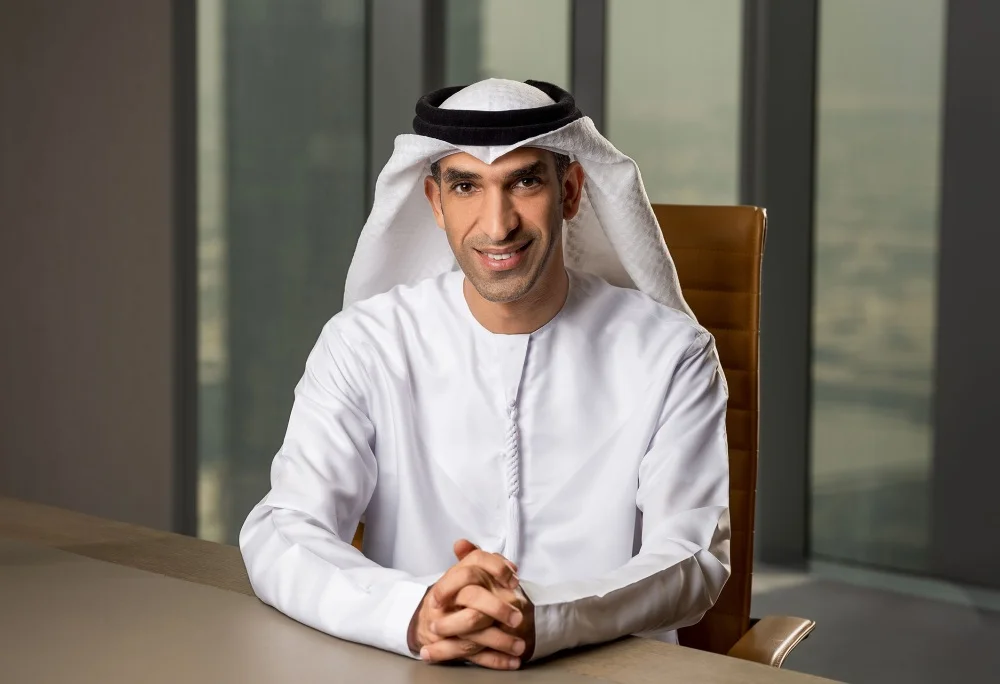

The United Arab Emirates has issued one of its sharpest public statements yet on the Strait of Hormuz crisis, with Foreign Trade Minister Dr. Thani bin Ahmed Al Zeyoudi declaring that no single party should be permitted to dominate the strategic waterway or weaponise it against the global economy.
Speaking on a panel titled “Ripple Effect: How the Conflict with Iran is Shaping Global Economies and Policies” at the GLOBSEC Forum 2026 in Prague, Al Zeyoudi laid out the UAE’s response to the mounting trade disruptions, framing the country’s position as one of multilateralism and economic resilience.
“The Strait of Hormuz Must Remain Open”
“The Strait of Hormuz must remain open and accessible to international navigation,” Al Zeyoudi told the audience of international officials, business leaders, and policymakers, adding that no single party should be able to control or weaponise such a strategic maritime passage against global markets.
The remarks come against the backdrop of Iranian aggression targeting Gulf Cooperation Council countries, including the UAE, and Tehran’s closure of the Strait, which has disrupted global energy supplies and placed sustained pressure on international trade flows.
A Dh1 Billion Cushion for UAE Businesses
Al Zeyoudi detailed a series of immediate measures the UAE has activated to contain the economic fallout:
- Activation of alternative trade routes designed to bypass the Strait of Hormuz and maintain supply-chain continuity
- A Dh1 billion economic support fund aimed at ensuring business continuity, with targeted assistance for small and medium-sized enterprises
- An acceleration of long-term logistics transformation plans originally designed to be implemented over a decade
“The logistics restructuring programme we originally planned to deliver over a decade is now being implemented within years,” the minister said, framing the disruption as a catalyst for strategies already in motion rather than a setback.
The $1.03 Trillion Trade Engine
Al Zeyoudi also reaffirmed that the UAE’s wider trade strategy remains intact and on track. The country’s Comprehensive Economic Partnership Agreements (CEPA) programme continues to function as the central driver of external trade growth, with 35 trade agreements concluded across six continents to date.
These agreements helped push the UAE’s non-oil foreign trade to $1.03 trillion in 2025, reinforcing the country’s position as a resilient global trade hub even as regional turbulence reshapes shipping and energy flows.
A Pattern of UAE Diplomatic Pressure
The Prague remarks form part of a sustained UAE diplomatic effort over recent weeks. The country has previously called for the immediate reopening of the Strait at the UN Security Council, urged the Council to enforce existing resolutions to protect international navigation, and publicly rejected Iran’s introduction of transit fees in the waterway as a form of economic extortion.
Together, these positions sketch a clear UAE doctrine: the Strait is a global commons, not a tool of leverage, and the response should be collective, not unilateral.
What It Means for Business
For UAE-based enterprises and global investors with regional exposure, three signals from Al Zeyoudi’s address matter most:
- Continuity is funded – the Dh1 billion SME support fund is now active, narrowing the operational risk for businesses caught in the disruption
- Logistics restructuring is real, not rhetorical – capital and infrastructure investment originally planned for the next decade is being deployed now
- Xternal trade remains the long game – with $1.03 trillion in non-oil trade and 35 CEPAs in place, the UAE is signalling that this crisis is not slowing its global integration; it is reinforcing the case for it
Source: This report is based on remarks delivered by Dr. Thani bin Ahmed Al Zeyoudi, UAE Minister of Foreign Trade, during a panel at the GLOBSEC Forum 2026 in Prague, as reported by Gulf News (25 May 2026). Additional context on the UAE’s earlier diplomatic positions at the UN Security Council and on Iranian transit fees is drawn from Gulf News reporting.