Last updated:
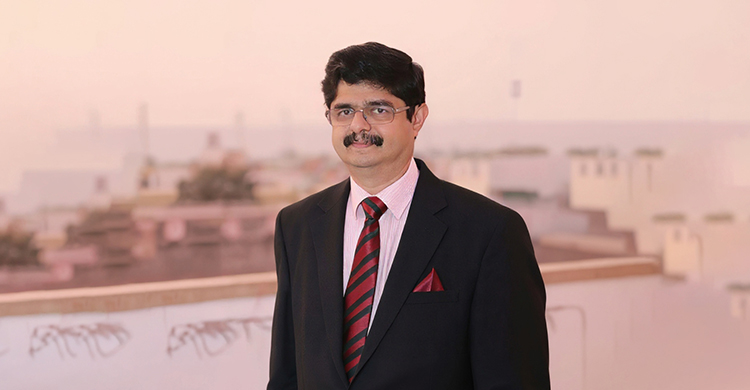
Few leaders embody the breadth of experience and strategic insight in the Indian flexible packaging industry quite like Atul Baijal. Currently the Whole Time Director at Ecoplast Limited, and formerly with Huhtamaki, Baijal’s career spans close to four decades across every major function of the sector—sales, operations, supply chain, procurement, quality assurance, and technical services.
Armed with a Post Graduate Diploma in Plastics from CIPET, he entered the industry at a time when India’s packaging landscape was still constrained by limited resources and regulatory hurdles. Over the years, he not only witnessed its transformation but also played a pivotal role in driving operational efficiencies, widening customer bases, and pioneering cost-optimisation strategies that improved profitability and growth. His leadership has been marked by a unique ability to blend technical expertise with business acumen, delivering results that resonate both domestically and on a global scale.
In this conversation with Business Frontier, Baijal reflects on the defining milestones of his journey, shares insights into the sector’s shift towards sustainability and innovation, and outlines his vision of India as a global hub for high-quality, future-ready packaging solutions.
Q. What first drew you to the plastics and packaging sector after your PGD in Plastics from CIPET, and how were your early years in the industry?
I was inspired by my cousin, who had pursued the same course and secured a promising career, which motivated me to specialise in plastics. In my early years, I was fortunate to work under exceptional mentors who instilled in me the values of safety, sincerity, discipline, commitment, and hard work. These principles laid a strong foundation for my professional journey and shaped my approach to the industry.
Q. You’ve worked across sales, operations, supply chain, and technical services. How did this cross-functional exposure shape your leadership approach?
I began my career in quality control before moving into technical services, which allowed me to understand customer applications and requirements. This exposure also gave me insights into sales, as I often accompanied sales teams, and into procurement, through interactions with technical, operational, and buying heads. These experiences built a strong foundation that proved invaluable when I later assumed leadership roles, equipping me with a holistic perspective across functions.
Q. Looking back, what have been the defining milestones in your journey through Positive Packaging, Huhtamaki, and Ecoplast Limited?
At Sai Metaplast, I introduced operational improvements that raised productivity by nearly a quarter and drove profits to three times their earlier levels. When I transitioned to a commercial role as Sales Head of the Flexible Division, the focus shifted to expansion — doubling sales and broadening the customer base in ways that strengthened both revenue and margins.
Later, as Procurement Head, I concentrated on supply chain efficiencies and cost optimisation, which delivered measurable results. Following the acquisition by Huhtamaki, I was entrusted with leading procurement for the combined entity, and the success of those initiatives led to an additional global mandate as buyer for aluminum foils. That assignment proved especially rewarding — within just three months, we generated annualised savings of more than USD 3 million.
At Ecoplast, defined and implemented strategies that helped in widening the customer base, increasing exports and thereby improving both top line and bottom line.
Q. How has the Indian flexible packaging industry evolved since the 1980s, and what shifts do you see driving its future growth?
In the 1980s, the industry was constrained by limited polymer supply and license restrictions. Real growth began in the mid-1990s, as MSMEs and mid-sized firms invested in capacity and technology. Reliance’s entry into polymers and the liberalisation of imports further accelerated expansion. Today, the Indian flexible packaging sector not only meets the growing needs of domestic FMCG companies but also exports significantly by meeting global quality standards. Going forward, innovation, scale, and global competitiveness will continue driving growth.
Q. Sustainability and recyclability are key global concerns. How do you see India’s packaging sector adapting to these demands?
The sector is collaborating closely with brand owners to optimise structures and develop recyclable laminates. With the government’s strong push on Extended Producer Responsibility (EPR) guidelines, companies are innovating to align with sustainability goals. The industry is rapidly adopting recyclable, mono-material structures and exploring circular economy practices to ensure long-term viability while meeting consumer and regulatory expectations.